
Why Your NSE6_FNC_AD-7.6 Study Plan Is Failing (And Fix It)
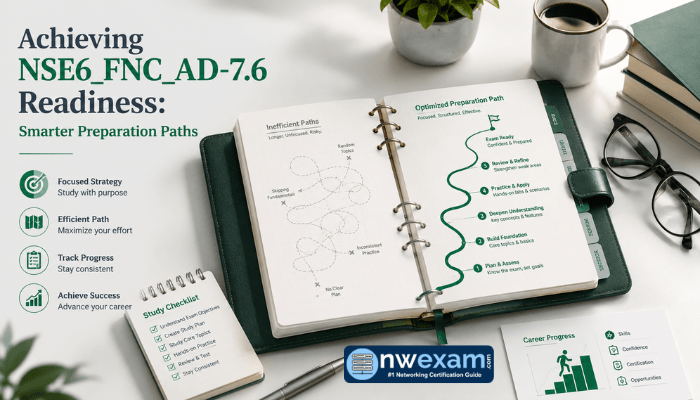
The Fortinet NSE 6 - FortiNAC-F 7.6 Administrator certification validates an individual's expertise in deploying, configuring, and troubleshooting FortiNAC solutions to secure network access. This credential is designed for network and security professionals who manage and maintain FortiNAC environments, ensuring robust device visibility, access control, and automated threat response. If your current approach to preparing for the NSE6_FNC_AD-7.6 exam isn't yielding the desired results, it's crucial to identify the underlying issues and implement corrective strategies. This comprehensive guide will explore common study plan failures and provide practical, structured solutions to help you effectively prepare and pass the Fortinet FortiNAC-F 7.6 Administrator exam.
Dissecting the FortiNAC Administrator Exam Structure
Achieving the Fortinet NSE 6 - FortiNAC-F 7.6 Administrator certification signifies a professional's validated skill set in managing FortiNAC-F 7.6. The exam, identified by the code NSE6_FNC_AD-7.6 FortiNAC Administrator, assesses your ability to handle various aspects of FortiNAC deployments. Understanding the exam's structure and administrative details is the first step towards a successful study plan. This foundational knowledge helps candidates gauge the commitment required and plan their preparation accordingly. For more in-depth administrative details, refer to the Fortinet NSE 6 - FortiNAC-F 7.6 Administrator official page.
Here are the key details about the NSE6_FNC_AD-7.6 examination:
-
Exam Price: The cost to attempt the exam is $200 USD.
-
Duration: Candidates are allotted 60-7065 minutes to complete the exam.
-
Number of Questions: The exam comprises 30-35 questions.
-
Passing Score: The Fortinet NSE6_FNC_AD-7.6 operates on a Pass / Fail system, meaning there isn't a specific numerical score provided for passing.
This structure indicates a focused assessment, requiring not just theoretical knowledge but practical understanding to navigate the multiple-choice or multiple-select questions effectively within the time limit.
Unpacking the FortiNAC-F 7.6 Administrator Syllabus
A failing study plan often stems from a superficial understanding or misinterpretation of the exam syllabus. The Fortinet NSE 6 - FortiNAC-F 7.6 Administrator exam blueprint outlines specific knowledge domains and their respective weightage, guiding your allocation of study time. Each topic area builds upon the last, forming a comprehensive picture of FortiNAC-F administration. A thorough review of these areas will highlight your strengths and identify critical gaps that need addressing.
The NSE6_FNC_AD-7.6 exam syllabus covers the following key topics and their approximate weightage:
-
Concepts and initial configuration (10–20%):
-
Model and organize infrastructure devices
-
Explain isolation networks and the configuration wizard
-
-
Deployment and provisioning (30–40%):
-
Configure security automation
-
Configure access control on FortiNAC-F
-
Configure and monitor high availability (HA)
-
Configure FortiNAC-F security policies
-
-
Integration (15–25%):
-
Integrate with third-party devices using syslog and SNMP trap input
-
Configure and use FortiNAC-F Manager
-
Configure FortiGate VPN integration with FortiNAC-F
-
Explain and configure MDM integration
-
-
Network visibility and monitoring (25–35%):
-
Configure guests and contractors
-
Explain and configure device profiling
-
Troubleshoot network devices and device status
-
These percentages are vital as they directly inform where you should focus the bulk of your study efforts, ensuring you prioritize high-impact areas like deployment, provisioning, and network visibility.
Identifying Common Obstacles to NSE6_FNC_AD-7.6 Success
Many aspiring FortiNAC-F 7.6 Administrators encounter similar hurdles that derail their study plans. Recognizing these common pitfalls is the first step toward correcting them and building a more resilient preparation strategy. It's not enough to simply study; you must study smart, identifying and mitigating factors that actively undermine your progress.
Overlooking the Official Exam Objectives
A frequent mistake is to dive into study materials without first thoroughly internalizing the official exam objectives. Each bullet point in the syllabus represents a specific skill or piece of knowledge Fortinet expects certified professionals to possess. Skimming these objectives means you might waste time on irrelevant topics or, worse, miss critical areas entirely. Your study should be directly mapped to these objectives, ensuring every hour spent is productive and targeted.
Insufficient Foundational Fortinet Knowledge
FortiNAC-F 7.6 administration doesn't exist in a vacuum. It relies on a strong understanding of core networking principles, cybersecurity concepts, and familiarity with the broader Fortinet ecosystem, particularly FortiGate. If your foundational knowledge in these areas is weak, you'll struggle to grasp the more advanced FortiNAC-F configurations and integrations. Attempting to build a complex structure on a shaky foundation inevitably leads to collapse.
Poor Time Allocation and Management
The Fortinet NSE6_FNC_AD-7.6 requires a significant time investment. Without a realistic and disciplined study schedule, time can quickly slip away. Many candidates underestimate the effort needed, leading to rushed last-minute cramming, which is rarely effective for comprehensive technical exams. Inconsistent study habits, procrastination, and failure to adjust the schedule for unexpected events are all signs of poor time management.
Neglecting Regular Practice and Assessment
Theoretical knowledge alone is insufficient. The exam tests practical application and problem-solving skills. Failing to integrate regular practice tests and lab simulations into your routine leaves you unprepared for the actual exam environment. This oversight can lead to unfamiliarity with question formats, poor time allocation during the exam, and an inability to apply concepts under pressure.
Lack of Practical FortiNAC-F Experience
While study materials provide conceptual understanding, hands-on experience with FortiNAC-F 7.6 is invaluable. Many exam questions are scenario-based, requiring you to think like an administrator solving real-world problems. Without practical exposure to configuring, troubleshooting, and monitoring FortiNAC-F in a lab or production environment, your ability to apply theoretical knowledge will be severely limited.
Crafting an Effective NSE6_FNC_AD-7.6 Preparation Strategy
Once you've identified the weaknesses in your current study plan, the next step is to implement a robust and adaptive strategy. A well-designed preparation approach for the NSE6_FNC_AD-7.6 Fortinet exam incorporates diverse resources, hands-on practice, and consistent self-assessment to ensure mastery of the required skills.
Mastering FortiNAC Concepts and Configuration
Begin by establishing a solid understanding of FortiNAC fundamentals before delving into complex deployments. The initial concepts are the building blocks for everything else.
Initial Setup and Infrastructure Modeling
Focus on how FortiNAC discovers and manages network devices. This involves understanding device types, roles, and the initial setup wizard. Pay close attention to how infrastructure devices are modeled and organized within the FortiNAC interface, as efficient management starts here. Ensure you understand the purpose and configuration of isolation networks, which are crucial for containing non-compliant or guest devices.
Security Automation and Access Control
Dive into the core functionalities of FortiNAC-F: security automation and access control. This involves understanding how policies are enforced, how devices are authenticated, and the various methods FortiNAC uses to grant or deny network access. Practice configuring authentication policies, enforcement policies, and user groups. This area is heavily weighted, so thorough understanding and hands-on practice are critical.
Deep Dive into Deployment and Provisioning
This section often represents the largest portion of the exam, emphasizing practical application. Successful deployment and provisioning hinge on your ability to translate theoretical knowledge into functional configurations.
FortiNAC-F Security Policies
Security policies are the heart of FortiNAC-F. Learn to design, implement, and troubleshoot robust policies that define user and device access based on identity, device posture, and network location. This includes understanding policy order, rule matching, and the impact of different policy actions. Practice creating complex policy sets that meet various organizational security requirements.
High Availability (HA) Implementations
Understanding how to configure and monitor High Availability (HA) for FortiNAC-F is essential for maintaining network uptime and resilience. This includes knowledge of HA modes, failover mechanisms, and the steps involved in deploying and verifying an HA cluster. Practical exercises simulating failover scenarios can greatly enhance your understanding in this critical area.
Seamless Integration with Third-Party Systems
FortiNAC often operates within a larger security ecosystem. The ability to integrate with other security tools and network devices is a key skill tested in the NSE6_FNC_AD-7.6 exam.
Syslog and SNMP Trap Integration
Understand how FortiNAC-F can communicate with external systems for logging and alerts. This involves configuring syslog servers to receive FortiNAC events and setting up SNMP traps to send notifications. Practice configuring these integrations and verifying their functionality to ensure effective monitoring and incident response.
FortiNAC-F Manager and FortiGate VPN
Learn to configure and utilize FortiNAC-F Manager for centralized administration of multiple FortiNAC instances. Additionally, focus on the integration between FortiNAC-F and FortiGate VPNs, understanding how FortiNAC can provide posture assessment and access control for remote VPN users. This integration enhances the overall security posture by extending NAC capabilities to remote access. Detailed information on this and other topics is available through the official FortiNAC Administrator exam details.
Strengthening Network Visibility and Monitoring
Effective network security relies on comprehensive visibility and continuous monitoring. This section of the exam focuses on the tools and techniques FortiNAC-F provides to achieve this.
Guest and Contractor Management
Learn to configure and manage network access for guests and contractors. This includes setting up captive portals, guest registration workflows, and temporary access policies. Understand the different authentication methods available for guests and how to enforce time-based or bandwidth-limited access.
Device Profiling and Troubleshooting
Device profiling is crucial for identifying and categorizing all devices connecting to the network, enabling granular policy enforcement. Practice configuring various profiling techniques, including passive and active methods. Furthermore, develop strong troubleshooting skills for network devices and device status within FortiNAC-F. This involves interpreting logs, diagnosing connectivity issues, and resolving policy enforcement failures.
Leveraging Diverse Study Resources for the Fortinet NSE6_FNC_AD-7.6
A multi-faceted approach to study resources can significantly enhance your preparation for the NSE6_FNC_AD-7.6 exam. Relying on a single source may leave gaps in your knowledge or fail to present information in a way that resonates with your learning style. Combining official materials with practical tools and community insights creates a comprehensive learning environment.
Official Fortinet Training Materials
The most authoritative resources come directly from Fortinet. This typically includes official courseware, such as the Fortinet Network Security Expert (NSE) Institute materials. These resources are specifically designed to align with the exam objectives and often provide practical labs or simulations that mirror real-world scenarios. Engaging with these materials should be your primary focus to ensure you cover all necessary topics directly from the source. For broader program insights, explore Fortinet's NSE 6 program.
Study Guides and Reference Books
While less common for specialized vendor exams, comprehensive study guides or unofficial reference books can offer alternative explanations and supplementary examples. These might help clarify complex topics presented differently in official documentation. Look for guides that are specifically updated for FortiNAC-F 7.6 to ensure accuracy and relevance.
Online Courses and Video Tutorials
Visual and interactive learning platforms can be incredibly effective. Many platforms offer instructor-led or self-paced video courses that break down complex FortiNAC-F topics into digestible modules. These courses often include demonstrations and configuration examples that can make abstract concepts more concrete. Choose courses that offer practical labs or hands-on exercises to reinforce learning.
FortiNAC Documentation and Community Forums
The official FortiNAC documentation (admin guides, release notes, cookbooks) is an indispensable resource for detailed technical information. Don't underestimate the power of Fortinet's community forums. Engaging with other professionals, asking questions, and reading discussions can provide valuable insights into common issues, best practices, and alternative solutions that might appear in scenario-based exam questions.
The Power of Practice Exams
Perhaps one of the most underutilized yet impactful resources is the practice test. Simulating the exam environment helps you become familiar with the question format, identify your weak areas, and manage your time effectively. High-quality practice tests provide detailed explanations for correct and incorrect answers, turning every question into a learning opportunity. Regularly taking practice tests is essential for assessing your readiness and building confidence. To test your knowledge and prepare for the actual certification, consider utilizing practical NSE6_FNC_AD-7.6 exam questions.
Implementing Practical FortiNAC-F 7.6 Administration Skills
Theoretical knowledge alone will not suffice for the NSE6_FNC_AD-7.6 certification. Fortinet places a strong emphasis on practical application, meaning your study plan must include dedicated time for hands-on experience. This practical component solidifies understanding, builds confidence, and prepares you for the scenario-based questions that are common in technical exams.
Hands-on Lab Environments
Setting up a dedicated FortiNAC-F 7.6 lab environment is non-negotiable. This could involve virtual machines running FortiNAC-F instances, ideally integrated with virtualized FortiGate devices and various client types (Windows, Linux, mobile). A lab allows you to:
-
Experiment with Configurations: Safely try out different FortiNAC policies, authentication methods, and integration settings without impacting a production network.
-
Troubleshoot Issues: Intentionally break configurations to understand error messages and practice systematic troubleshooting.
-
Simulate Device Connections: Connect different types of endpoints and observe how FortiNAC profiles and enforces policies for them.
Consistent lab practice helps ingrain the command syntax, GUI navigation, and the logical flow of FortiNAC operations.
Simulating Real-World Scenarios
Beyond basic configuration, challenge yourself with complex, multi-component scenarios that mimic real-world deployment challenges. For example:
-
Guest Access Portals: Implement a guest portal with custom branding, sponsor approval workflows, and time-limited access.
-
Compliance Checks: Configure FortiNAC to detect non-compliant devices (e.g., missing antivirus, out-of-date patches) and automatically quarantine them to an isolation VLAN.
-
IoT Device Onboarding: Design a solution for securely onboarding new IoT devices with specific profiles and restricted network access.
These exercises force you to integrate knowledge from different syllabus domains and think critically about how FortiNAC addresses practical security needs.
Troubleshooting Methodologies
A significant part of administering FortiNAC-F involves identifying and resolving issues. Develop a systematic troubleshooting methodology. This includes:
-
Log Analysis: Learn to effectively interpret FortiNAC logs, authentication reports, and device event details to pinpoint root causes.
-
Packet Captures: Understand when and how to perform packet captures on network devices or the FortiNAC appliance to analyze network traffic related to authentication and enforcement.
-
Policy Tracing: Utilize FortiNAC's tools to trace how a specific device's connection is evaluated against configured policies.
Strong troubleshooting skills are not just for passing the exam; they are vital for your day-to-day role as a FortiNAC administrator.
Maintaining Momentum and Overcoming Study Fatigue
The journey to certification can be long and demanding, making it easy to lose motivation or suffer from burnout. A sustainable study plan for the NSE6_FNC_AD-7.6 must include strategies to maintain momentum and combat study fatigue, ensuring consistent progress without sacrificing well-being.
Setting Realistic Milestones
Break down the vast syllabus into smaller, manageable chunks. Instead of aiming to "study for the exam," set specific, achievable weekly or bi-weekly milestones, such as "complete the Deployment and Provisioning section" or "successfully configure HA in the lab." Each completed milestone provides a sense of accomplishment and reinforces your progress, making the overall goal seem less daunting.
Regular Review and Self-Assessment
Don't wait until the end to review. Integrate short review sessions into your daily or weekly routine. Regularly revisit previously covered topics to reinforce memory and identify areas that might need a refresher. Utilize flashcards, self-quizzes, or summarize concepts in your own words. Consistent self-assessment through practice questions helps to gauge retention and directs your focus to lingering weak spots.
Building a Support Network
Studying in isolation can be demotivating. Connect with other individuals who are also preparing for the Fortinet NSE6_FNC_AD-7.6 or other Fortinet certifications. This could be through online forums, study groups, or professional communities. Sharing challenges, exchanging tips, and discussing complex topics can provide valuable motivation, different perspectives, and a sense of shared journey. A study partner can also hold you accountable and provide encouragement.
Prioritizing Well-being
Ignoring your physical and mental health is a sure way to invite study fatigue. Ensure you get adequate sleep, maintain a balanced diet, and incorporate regular physical activity into your routine. Schedule breaks during study sessions and dedicate time to hobbies or social activities. A fresh, rested mind is far more efficient at absorbing and retaining information than an exhausted one. Remember, preparation is a marathon, not a sprint.
Strategic Review for the NSE6_FNC_AD-7.6 Exam Day
As the Fortinet NSE6_FNC_AD-7.6 exam day approaches, shifting your focus from learning new material to strategic review and mental preparation is essential. This final phase consolidates your knowledge, refines your test-taking skills, and boosts your confidence.
Final Knowledge Consolidation
In the weeks leading up to the exam, concentrate on reviewing all syllabus domains, paying extra attention to your identified weak areas. Instead of rereading entire chapters, focus on summary notes, flashcards, and key configuration commands. Practice explaining complex concepts in simple terms, which is a strong indicator of true understanding. Ensure you have a clear grasp of percentages for each domain, allocating your final review time accordingly to high-weighted sections like Deployment and Provisioning, and Network Visibility and Monitoring.
Understanding Question Types
Familiarize yourself with the likely question formats you'll encounter. Fortinet certification exams typically include multiple-choice questions (MCQ) and potentially multiple-select questions (MSQ). Practice identifying keywords in questions, eliminating obviously wrong answers, and critically evaluating the remaining options. Pay attention to "choose the BEST answer" scenarios, which often require careful consideration of context and best practices.
Time Management During the Exam
With 30-35 questions in 60-7065 minutes, effective time management is critical. During your final practice tests, strictly adhere to the time limit. Learn to pace yourself, avoiding spending too much time on a single challenging question. Develop a strategy for marking difficult questions to return to later, ensuring you attempt all questions you feel confident about first. Remember that a passing score doesn't require perfection, so prioritize questions where you are most likely to earn points.
Coping with Exam Anxiety
It's natural to feel some anxiety before a high-stakes exam. Develop strategies to manage it. Practice deep breathing exercises, positive visualization, and getting a good night's sleep the night before. Arrive at the testing center early to avoid last-minute rush. During the exam, if you feel overwhelmed, take a brief moment to close your eyes, take a few deep breaths, and refocus. Confidence comes from thorough preparation, so trust in the work you've put in.
Validating Your Fortinet FortiNAC-F 7.6 Administrator Expertise
Passing the NSE6_FNC_AD-7.6 exam is more than just earning a certificate; it's a validation of a specialized skill set highly sought after in modern network security. The Fortinet NSE 6 - FortiNAC-F 7.6 Administrator certification officially recognizes your ability to deploy, manage, and troubleshoot FortiNAC solutions, positioning you as a crucial asset in any organization's security posture.
This credential confirms your proficiency in critical areas such as granular access control, automated threat response, device profiling, and seamless integration with other Fortinet products like FortiGate. It demonstrates that you can secure network access for diverse users and devices, enforce compliance, and maintain a resilient and visible network environment. The skills validated by this exam are directly applicable to safeguarding enterprise networks against evolving cyber threats, ensuring that only authorized and compliant entities can access sensitive resources.
The Professional Advantage of Fortinet NSE 6 Certification
Beyond technical validation, the Fortinet NSE 6 - FortiNAC-F 7.6 Administrator certification offers significant professional advantages. It signals to employers and peers that you possess a dedicated level of expertise in a specialized, in-demand field. This can open doors to new career opportunities, lead to advancement in your current role, and potentially command higher compensation.
Being a Fortinet NSE 6 certified professional places you within an elite community of cybersecurity experts. It reflects a commitment to continuous learning and staying current with the latest security technologies and best practices. In an increasingly interconnected and threat-laden digital landscape, professionals with proven FortiNAC-F 7.6 administration skills are indispensable for maintaining robust network security and ensuring operational continuity. This certification is a testament to your capability to contribute significantly to an organization's security objectives.
Ultimately, a failing NSE6_FNC_AD-7.6 study plan is not a dead end but an opportunity for course correction. By honestly evaluating your current approach, addressing common pitfalls, and adopting a structured, hands-on, and resilient preparation strategy, you can transform your study efforts into a clear path to certification success. The Fortinet NSE 6 - FortiNAC-F 7.6 Administrator certification is a valuable credential that underscores your expertise in securing modern networks.
Take control of your preparation journey today. Dedicate yourself to understanding the core concepts, practicing diligently in lab environments, and leveraging high-quality resources to solidify your knowledge. Don't let common study failures hold you back from achieving this important career milestone. Start your journey towards a stronger understanding and ultimate success by utilizing resources that help you boost your NSE6_FNC_AD-7.6 preparation.
Frequently Asked Questions
1. Who is the Fortinet NSE6_FNC_AD-7.6 certification intended for?
This certification is designed for network and security professionals responsible for deploying, configuring, and troubleshooting FortiNAC solutions to secure network access in enterprise environments.
2. What knowledge areas does the NSE6_FNC_AD-7.6 exam cover?
The exam covers core FortiNAC-F 7.6 concepts, initial configuration, deployment and provisioning (including security automation, access control, HA, and policies), integration with third-party devices, and network visibility and monitoring (guest management, device profiling, troubleshooting).
3. How important is hands-on experience for passing the Fortinet NSE 6 - FortiNAC-F 7.6 Administrator exam?
Hands-on experience is crucial. The exam includes scenario-based questions that require practical application of FortiNAC-F knowledge. Lab practice helps solidify theoretical concepts and builds confidence in configuration and troubleshooting tasks.
4. What is the recommended duration to study for the NSE6_FNC_AD-7.6 exam?
The ideal study duration varies based on prior experience. However, a structured plan typically involves several weeks to a few months of consistent study, including official courseware review, documentation reading, and extensive lab practice.
5. Does the Fortinet NSE 6 - FortiNAC-F 7.6 Administrator certification need to be renewed?
Fortinet certifications typically have an expiration period, after which they need to be renewed to remain current. Renewing usually involves passing the latest version of the exam or a higher-level Fortinet certification within the NSE program. Candidates should refer to the official Fortinet NSE program policies for the most up-to-date renewal requirements.
- FortiNAC Administrator Certification Mock Test |
- Fortinet FortiNAC Administrator Certification |
- FortiNAC Administrator Mock Exam |
- FortiNAC Administrator Practice Test |
- Fortinet FortiNAC Administrator Primer |
- FortiNAC Administrator Simulator |
- FortiNAC Administrator |
- FortiNAC Administrator Exam Questions |
- Fortinet FortiNAC Administrator Questions |
- Fortinet FortiNAC Administrator Practice Test |
- FortiNAC Administrator Books |
- FortiNAC Administrator Certification Cost |
- FortiNAC Administrator Certification Syllabus |
- Fortinet FortiNAC Administrator Training |
- Fortinet FortiNAC Administrator Books |
- FortiNAC Administrator Sample Questions |
- FortiNAC Administrator Certification Questions and Answers |
- FortiNAC Administrator Certification Sample Questions |
- Fortinet NSE5_FNC_AD-7.6 Books |
- NSE5_FNC_AD-7.6 Syllabus |
- NSE6_FNC_AD-7.6 FortiNAC Administrator |
- NSE6_FNC_AD-7.6 |
- Fortinet NSE 6 - FortiNAC Administrator |
- Fortinet NSE6_FNC_AD-7.6 Practice Test Free


