Blogs

The ACI Shift: Why Your Cisco ACI Certification is Key

A confident male professional in a modern data center, symbolizing career progression after achieving Cisco 300-620 DCACI certification. The image uses a cinematic realism style with deep navy and electric blue tones.

The Implementing Cisco Application Centric Infrastructure (DCACI) 300-620 exam is an important step for network professionals. It helps validate their expertise in modern data center deployments. This certification is offered by Cisco. It evaluates a candidate's practical skills in implementing Cisco ACI solutions. The exam covers areas such as fabric discovery, external network connectivity, and service integrations. It is ideal for network engineers, data center engineers, and solution architects. These professionals are often involved in deploying and managing ACI environments. This comprehensive article explores the importance of Cisco ACI certification. It also covers essential concepts, exam structure, and effective preparation strategies. These strategies can help candidates maximize their chances of success.

Validating Expertise with Cisco's 300-620 DCACI Exam

The Cisco 300-620 DCACI exam is an important benchmark for professionals specializing in Application Centric Infrastructure (ACI). It validates a candidate's ability to implement and manage Cisco ACI fabric. Candidates must understand packet forwarding within ACI. They should also know how to configure external network connectivity. The exam covers ACI integration with various services. Earning this certification demonstrates a strong understanding of modern, policy-driven data centers. It also helps professionals stand out in the rapidly evolving IT industry.

The CWNA-110 Prep Secret Top Wireless Pros Understand

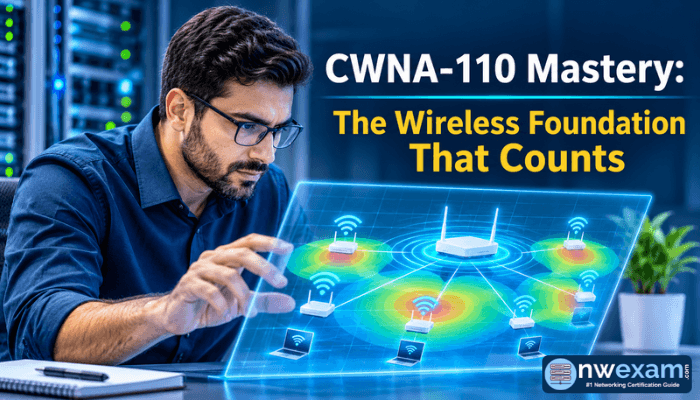
A professional man studying a holographic display of a complex wireless network, symbolizing the foundational knowledge gained from CWNA-110 certification.

The CWNA-110 certification, offered by CWNP, stands as a fundamental credential for professionals aspiring to master enterprise Wi-Fi. This Certified Wireless Network Administrator (CWNA) exam validates a candidate's foundational knowledge across various wireless LAN technologies, from RF fundamentals and 802.11 standards to security and site surveying. It serves as a crucial stepping stone for network engineers, administrators, and IT managers looking to specialize in wireless networking. This article unveils the strategic preparation methods, career advantages, and essential insights that distinguish top wireless professionals in their pursuit of CWNA-110 success.

Defining the CWNA-110 Credential's Core Value

The CWNA-110 certification establishes a robust understanding of wireless networking principles, essential for anyone working with Wi-Fi infrastructure. This foundational credential validates a professional's competency in critical areas such as radio frequency (RF) behavior, antenna characteristics, spread spectrum technologies, and the intricate workings of the IEEE 802.11 standard. Achieving the CWNA-110 demonstrates a commitment to foundational excellence, signaling to employers a solid grasp of the technologies underpinning modern wireless networks. It's designed for individuals who manage, support, or design wireless networks and need to ensure optimal performance and security.

CCNP Service Provider Certification: Exams, Skills, Cost, and How to Prepare

Network engineer in a modern network operations center with a glowing fiber-optic backbone map and interconnected MPLS network paths, representing CCNP Service Provider certification.

What Is CCNP Service Provider?

CCNP stands for Cisco Certified Network Professional. The Service Provider track sits between CCNA (associate) and CCIE Service Provider (expert) in Cisco's certification ladder. It targets the technologies that differentiate a carrier network from an enterprise network: large-scale IGP and BGP design, MPLS and segment routing, Layer 2 and Layer 3 VPN services, quality of service, high availability, multicast, and model-driven automation.

Cisco's own description of the skills a CCNP Service Provider holder demonstrates includes:

  • Troubleshooting routing protocols at scale

  • Implementing high availability

  • Implementing MPLS

  • Implementing multicast and QoS services

  • Automating network configuration

  • Implementing routing policy language (RPL) and route maps

Unlike older Cisco tracks, every exam you pass on the way to CCNP Service Provider also earns you a standalone Cisco Certified Specialist badge. Pass SPCOR and you immediately hold Cisco Certified Specialist – Service Provider Core, even before you sit the concentration exam.

The Ultimate Guide to the Palo Alto Certification Path

Palo Alto Networks has completely rebuilt its certification program. The legacy exams many IT professionals still ask about (PCCET, PCNSA, PCNSE, PCCSE, PCDRA, PCSAE) have been retired and replaced by a role-based framework organized into four levels, Foundational, Professional, Specialist, and Architect, across three platforms: Network Security, Security Operations, and Cloud Security.

In the ever-evolving world of information technology and cybersecurity, staying ahead of the curve is essential. One way to do this is by obtaining industry-recognized certifications that validate your expertise and skills. Among the top choices for professionals in the field is the Palo Alto certification path. This updated guide explains the current Palo Alto Networks certification program, why it is worth pursuing, how the new path is structured, and how you can begin your journey to becoming a certified Palo Alto Networks professional.

Understanding Palo Alto Networks

Palo Alto Networks is a leading cybersecurity company renowned for its cutting-edge security solutions. Its Next-Generation Firewalls, Prisma SASE, Cortex security operations platform, and Cortex Cloud are considered some of the best in the industry. To effectively operate and manage these systems, professionals need specialized knowledge and skills, which is where Palo Alto Networks certifications come into play.


Fortinet vs Palo Alto Cert: Which Path Fuels Your Career?

A male cybersecurity professional contemplates a digital career map showing two paths, Fortinet and Palo Alto, for certification choice.

Navigating the complex landscape of cybersecurity requires professionals to possess specialized skills, often validated through industry-recognized certifications. For those aiming to build expertise in firewall management and network security, certifications from leading vendors like Fortinet and Palo Alto Networks are highly sought after. This article thoroughly compares Fortinet vs Palo Alto certification programs, examining their career impact, market demand, and the distinct paths they offer to cybersecurity professionals. Understanding which vendor’s credential best aligns with your career aspirations is crucial for strategic professional development in this competitive field.

Comparing Cybersecurity Certification Ecosystems

Both Fortinet and Palo Alto Networks stand as formidable forces in the cybersecurity arena, each offering robust product suites and comprehensive certification programs. While both vendors aim to secure enterprise networks, their underlying philosophies, technological approaches, and, consequently, their certification focuses differ significantly. Fortinet emphasizes a broad, integrated security fabric, whereas Palo Alto Networks is renowned for its next-generation firewall technology and platform-centric security.

JN0-352: The Hands-On Edge in Enterprise Networking

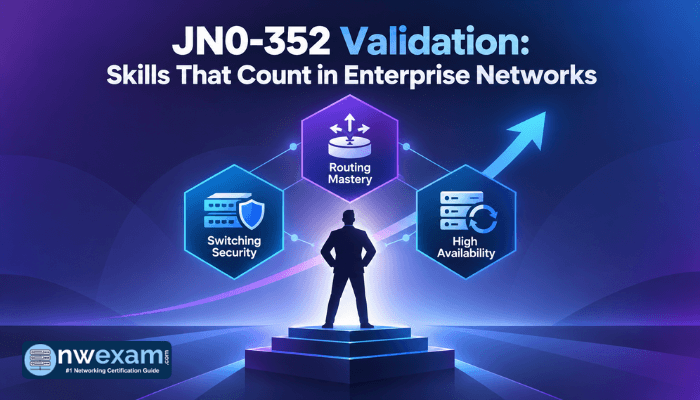
A conceptual infographic showing a professional figure with interconnected hexagons representing JN0-352 skills, symbolizing career growth and validated expertise.

The JN0-352 exam, leading to the HPE Juniper Networking Enterprise Routing and Switching Specialist certification, serves as a critical validation for networking professionals. This credential signifies a candidate's advanced proficiency in implementing and troubleshooting complex routing and switching solutions within enterprise environments. Individuals pursuing the JN0-352 certification typically include network engineers, administrators, and architects who aim to deepen their expertise in Juniper Networks technology. This comprehensive article delves into the intricacies of the exam, outlines essential study areas, and provides strategic insights for successful preparation, ensuring candidates are well-equipped to demonstrate their real-world networking capabilities.

Validating Enterprise Networking Expertise with JN0-352

The modern enterprise network demands robust, scalable, and secure routing and switching infrastructures. Professionals capable of designing, deploying, and maintaining these systems are indispensable. The JN0-352 exam directly addresses this need by assessing a candidate's practical skills and theoretical understanding of Juniper Networks' enterprise routing and switching technologies, making it a valuable benchmark in the industry.

Propel Your Career with Cisco 300-110 WLSD

A woman working on a laptop with a holographic display of a wireless network diagram. The image represents the strategic design aspect of the Cisco 300-110 WLSD certification.

The Cisco 300-110 WLSD exam is a pivotal certification designed for network professionals who aspire to specialize in the intricate world of wireless network design. This exam, formally known as Designing Cisco Wireless Networks, validates a candidate's expertise in designing, planning, and implementing Cisco wireless solutions. Professionals seeking to advance their careers in enterprise-level WLAN architecture, particularly those focusing on scalability, security, and high availability, should consider this credential. This comprehensive article will delve into the exam structure, detailed syllabus topics, and strategic preparation advice to guide you toward achieving this significant career milestone.

Discerning the Cisco 300-110 WLSD Exam Structure

Successfully undertaking the Cisco 300-110 WLSD certification journey begins with a clear understanding of its format and requirements. This exam is a critical component for several advanced Cisco certifications, showcasing proficiency in complex wireless network design principles. Acquiring this credential demonstrates your capability to craft robust and efficient wireless solutions that meet diverse organizational needs.

The key details regarding the Designing Cisco Wireless Networks exam are:

  • Exam Name: Designing Cisco Wireless Networks

  • Exam Code: 300-110 WLSD

  • Duration: 120 minutes

  • Number of Questions: 55-65

Why CWNP CAIAE-101 Certification Isn't Just a Piece of Paper

A professional woman intently observing a digital dashboard displaying AI model performance and data flow, symbolizing the critical, validated skills of the CWNP CAIAE-101 certification.

The CWNP CAIAE-101 certification serves as a robust validation of an individual's expertise in administering and engineering artificial intelligence solutions. This credential, known officially as the CWNP Certified AI Administrator and Engineer, proves a professional's deep understanding and practical ability in managing complex AI environments and deploying machine learning models effectively. For those aiming to solidify their professional standing and demonstrate proficiency in the rapidly evolving AI landscape, the CWNP CAIAE-101 certification is a critical benchmark. This comprehensive guide explores the profound value this certification offers, detailing the skills it validates, its impact on career trajectories, and strategic approaches to preparation, ensuring candidates grasp why it is far more than just a document. It directly addresses the urgent industry need for certified professionals capable of navigating the intricacies of modern machine learning operations (MLOps) and AI model deployment, establishing a credible standard for excellence in this specialized field.

The 73% Trap: Why 300-120 WLSI Candidates Get Stuck

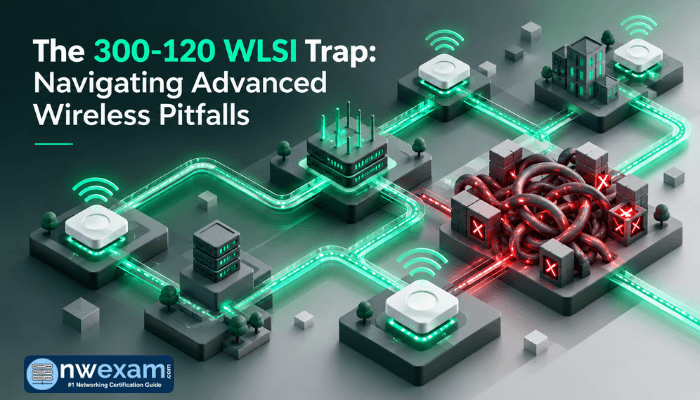
An isometric 3D illustration of a wireless network with a visibly tangled section, symbolizing the pitfalls and 'trap' for candidates taking the Cisco 300-120 WLSI exam.

The Cisco 300-120 WLSI exam, officially known as Implementing Cisco Wireless Advanced Solutions, validates a candidate's advanced knowledge and skills in designing, implementing, and troubleshooting complex wireless networks. This certification is crucial for network professionals aiming to master the intricacies of Cisco wireless LAN solutions, covering topics from FlexConnect and QoS to advanced security and location services. This article delves into the critical pitfalls that often lead candidates into the dreaded '73% trap' – a common scenario where aspiring certified professionals consistently fall just short of the passing score, getting stuck in a cycle of repeated attempts and frustration. We will explore the common mistakes, highlight effective strategies, and provide guiding insights to help candidates successfully navigate the challenges of the Cisco 300-120 WLSI examination.

Exam Essentials for Cisco 300-120 WLSI

Understanding the fundamental structure of the Implementing Cisco Wireless Advanced Solutions exam is the first step toward effective preparation. The 300-120 WLSI exam assesses specialized expertise in managing and securing advanced wireless infrastructures. Familiarity with these core details helps candidates strategize their study approach, focusing on time management and critical areas.

The key details for the 300-120 WLSI exam include:

  • Exam Name: Implementing Cisco Wireless Advanced Solutions

  • Exam Code: 300-120

  • Duration: 120 minutes

  • Number of Questions: 55-65

Cisco CCNA vs Juniper JNCIA: Don't Regret Your First Cert

Choosing an entry-level networking certification marks a pivotal moment for aspiring IT professionals. The Cisco Certified Network Associate (CCNA) 200-301 and Juniper Networks Certified Associate – Junos (JNCIA-Junos) JN0-106 are two leading credentials designed to validate fundamental networking skills and establish a strong career foundation. This comprehensive comparison aims to provide an objective, data-backed perspective on both certifications, helping candidates make an informed decision about which path best aligns with their career aspirations and learning preferences, ensuring they don't regret their first certification choice. We will explore their scope, exam details, career implications, and preparation pathways.

Understanding the Cisco Certified Network Associate (CCNA) Credential

The Cisco CCNA certification is a globally recognized, associate-level credential that validates a broad range of foundational networking knowledge and skills relevant to modern IT infrastructure. It serves as a cornerstone for careers in networking, providing a comprehensive understanding of core networking concepts, security fundamentals, automation, and programmability. Professionals holding the CCNA are equipped to install, configure, operate, and troubleshoot small to medium-sized enterprise networks. This certification is ideal for network administrators, support engineers, and data center technicians seeking to demonstrate proficiency in Cisco technologies, which dominate a significant portion of the enterprise networking market.

Syndicate content