
Beyond Sample Questions: HQT-6714's Core Concepts
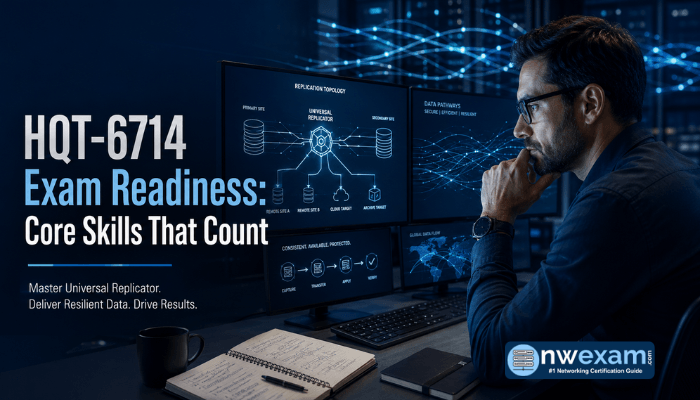
The Hitachi Vantara HQT-6714 exam validates a candidate's proficiency in managing and operating Hitachi Universal Replicator environments. This certification, officially known as the Hitachi Vantara Qualified Professional Universal Replicator, targets IT professionals responsible for implementing and maintaining critical data replication solutions. Achieving this credential signifies a deep understanding of Hitachi Universal Replicator's architecture, configuration, operations, and troubleshooting within complex storage infrastructures. This advanced guide delves beyond typical sample questions to explore the foundational concepts and practical skills essential for success, providing a comprehensive Hitachi Vantara HQT-6714 study guide for aspiring certified professionals.
Defining the HQT-6714 Certification's Mandate
The Hitachi Vantara HQT-6714 certification serves as a testament to an individual's expertise in leveraging Hitachi Universal Replicator for robust data protection and disaster recovery strategies. Professionals pursuing this credential typically include storage administrators, data center architects, and system engineers who work with Hitachi Vantara storage solutions. The exam evaluates the candidate's ability to not only understand theoretical concepts but also to apply practical skills in real-world scenarios, ensuring that certified individuals can effectively deploy and manage Universal Replicator to maintain business continuity and data integrity. This commitment to practical application ensures that the certification holds significant value in the enterprise storage domain.
Validated Competencies for Universal Replicator Management
The HQT-6714 exam specifically focuses on the core competencies required to implement, operate, and troubleshoot Hitachi Universal Replicator. Successful candidates demonstrate an understanding of synchronous and asynchronous replication methods, crucial for designing resilient data architectures. They can differentiate between various replication topologies, including two-data center and three-data center (3DC) configurations, and apply best practices for each. The ability to perform operations using both Command Line Interface (CLI) and Hitachi Ops Center Protector (GUI) is also a key area of validation, reflecting the need for versatile management skills in diverse operational environments.
The Professional Edge of Hitachi Vantara Credentials
Earning the Hitachi Vantara HQT-6714 certification provides a distinct professional edge, showcasing specialized skills in a critical area of IT infrastructure. It enhances credibility, opens doors to advanced roles, and demonstrates a commitment to mastering Hitachi Vantara technologies. Employers often seek certified professionals for roles requiring high-availability and disaster recovery solutions, making this certification a valuable asset for career advancement. Furthermore, the knowledge gained during preparation directly translates into improved operational efficiency and reduced downtime for organizations relying on Hitachi Universal Replicator.
Examining the Hitachi Vantara HQT-6714 Structure
Understanding the HQT-6714 exam format is crucial for effective preparation. The certification aims to assess a candidate's broad knowledge across several key areas of Universal Replicator management, from foundational concepts to advanced operations and troubleshooting. Familiarity with the exam's mechanics helps candidates allocate study time efficiently and approach the testing environment with confidence. This structured overview provides insights into what to expect on the day of the exam.
The Hitachi Vantara HQT-6714 exam details are as follows:
-
Exam Name: Universal Replicator management Professional
-
Exam Code: HQT-6714
-
Exam Price: $100 USD
-
Duration: 60 minutes
-
Number of Questions: 35
-
Passing Score: 62%
The exam duration of 60 minutes for 35 questions implies candidates must manage their time judiciously, averaging approximately 1.7 minutes per question. A passing score of 62% means correctly answering at least 22 out of 35 questions. This structure necessitates not only accurate knowledge but also the ability to recall information quickly and make informed decisions under timed conditions. Preparing with a focus on understanding core principles rather than rote memorization can significantly improve performance.
Core Disciplines within the HQT-6714 Syllabus
The Hitachi Vantara HQT-6714 syllabus encompasses a comprehensive range of topics designed to ensure proficiency in managing Universal Replicator environments. Each domain addresses critical aspects of data replication, from initial deployment to complex operational scenarios and problem resolution. A thorough understanding of these areas is paramount for any professional seeking the Hitachi Vantara Qualified Professional Universal Replicator certification. This section provides a detailed breakdown of the knowledge areas you need to master.
The Hitachi Vantara HQT-6714 exam topics include:
-
Hitachi Universal Replicator overview and architecture
-
Hitachi Universal Replicator setup
-
Hitachi Universal Replicator operations using the Command Line Interface (CLI)
-
Hitachi Universal Replicator operations using Hitachi Ops Center Protector (GUI)
-
Hitachi Universal Replicator three data center (3DC) operations
-
Hitachi Universal Replicator troubleshooting
-
VSP One SDS Block replication
Each of these syllabus points represents a critical area of expertise. For instance, the overview and architecture section lay the groundwork for understanding how Universal Replicator functions, while the setup and operations topics cover the practical implementation and daily management tasks. Diving into specific replication concepts, like 3DC operations, requires a nuanced understanding of advanced configurations and their implications for disaster recovery. Effective preparation involves not just reviewing these topics but engaging with them through practical exercises and real-world scenarios.
For those seeking to evaluate their current understanding and pinpoint areas for improvement, exploring Hitachi Vantara HQT-6714 sample questions can provide valuable insights into the exam's question style and depth.
Navigating Universal Replicator Architecture and Setup
A fundamental understanding of the Hitachi Universal Replicator's architecture is the cornerstone for effective management and troubleshooting. This section delves into the foundational elements and initial configuration processes, which are critical for establishing a robust data replication environment. Without a solid grasp of how the components interact and the correct setup procedures, subsequent operations and disaster recovery efforts would be compromised.
Understanding the Universal Replicator Overview
The Hitachi Universal Replicator provides sophisticated asynchronous and synchronous replication capabilities across various distances. Its architecture is built upon a foundation of primary and secondary storage systems, employing journaling and copy operations to maintain data consistency. Key architectural components include control paths, data paths, and journal volumes, each playing a vital role in the replication process. An in-depth understanding of these components and their interactions is essential to comprehend the system's behavior under different workloads and failure scenarios.
Executing Hitachi Universal Replicator Setup
The setup phase for Hitachi Universal Replicator involves several critical steps, from planning and prerequisites to configuration of volumes, journal settings, and replication pairs. This includes:
-
Prerequisite Checks: Verifying hardware compatibility, network connectivity, and software versions across all involved storage systems.
-
Volume Allocation: Identifying and provisioning appropriate primary, secondary, and journal volumes for replication. Journal volumes are particularly important for asynchronous replication, storing write sequences to ensure recovery point objectives (RPO).
-
Replication Group Configuration: Defining replication groups (consistency groups) to ensure that related data is replicated consistently, preventing data corruption during failover.
-
Pair Creation: Establishing the replication pairs between primary and secondary volumes, specifying the replication type (synchronous or asynchronous) and other parameters.
Successful setup lays the groundwork for seamless operations and reliable disaster recovery capabilities. It is a meticulous process that requires attention to detail and adherence to Hitachi Vantara's best practices, as outlined in the official HQT-6714 syllabus document.
Mastering Operations with CLI and Ops Center Protector
Effective management of Hitachi Universal Replicator relies on proficiency with its primary control interfaces: the Command Line Interface (CLI) and the Hitachi Ops Center Protector (GUI). These tools offer distinct advantages for different operational needs, from scripting automated tasks to visual monitoring and complex configuration changes. The HQT-6714 exam emphasizes competence in both, ensuring certified professionals can adapt to various operational environments and requirements.
Hitachi Universal Replicator Operations Using CLI
The Command Line Interface (CLI) provides granular control over Universal Replicator functions, making it ideal for automation, scripting, and remote management. Mastery of CLI commands is crucial for:
-
Replication Pair Management: Creating, deleting, suspending, and resuming replication pairs. This includes commands for checking pair status, updating settings, and performing initial copy operations.
-
Journal Volume Management: Configuring, expanding, and monitoring journal volumes, which are integral to asynchronous replication and maintaining data integrity.
-
Consistency Group Operations: Managing consistency groups to ensure atomicity of writes across multiple volumes, critical for application consistency during failover.
-
Status Monitoring: Retrieving detailed status information about replication groups, pairs, and volumes to diagnose issues and confirm operational health.
CLI operations offer speed and precision, particularly in large-scale deployments or when integrating with existing automation frameworks. Understanding command syntax, parameters, and expected output is key.
Hitachi Universal Replicator Operations Using Hitachi Ops Center Protector (GUI)
Hitachi Ops Center Protector offers a centralized, graphical interface for managing data protection operations, including Universal Replicator. Its intuitive design simplifies complex tasks, providing visual dashboards and streamlined workflows. Key GUI operations include:
-
Dashboard Monitoring: Visualizing the health and status of all replication pairs and groups at a glance, with alerts for potential issues.
-
Guided Configuration: Step-by-step wizards for creating and modifying replication pairs, simplifying the setup process for new administrators.
-
Policy-Based Management: Defining and applying data protection policies that automate replication tasks and ensure compliance with recovery objectives.
-
Reporting and Analytics: Generating reports on replication performance, status, and compliance, offering insights for capacity planning and auditing.
While the GUI enhances usability, it's vital to understand the underlying replication concepts to interpret the visual data accurately and troubleshoot effectively. Competence in both CLI and GUI ensures a well-rounded skill set for any Universal Replicator administrator.
Implementing Three Data Center (3DC) Strategies
Advanced disaster recovery strategies often involve more than two data centers, leading to the adoption of Three Data Center (3DC) operations with Hitachi Universal Replicator. These configurations provide enhanced resilience by allowing for multiple recovery points and continuous data availability even in the event of a catastrophic regional outage. Understanding the various 3DC topologies and their implementation details is a critical aspect of the HQT-6714 syllabus.
Architectural Models for 3DC Operations
Hitachi Universal Replicator supports several 3DC configurations, each designed to meet different RPO and RTO (Recovery Time Objective) requirements. The most common models include:
-
Cascade (Star) Configuration: Data is replicated synchronously from Site A to Site B, and then asynchronously from Site B to Site C. This provides continuous data protection at Site B and a disaster recovery site at Site C.
-
Multi-Target (Delta) Configuration: Data is replicated synchronously from Site A to Site B, and also asynchronously from Site A directly to Site C. This offers independent replication paths to both secondary sites.
-
Universal Replicator + Global-active Device (GAD) in 3DC: This advanced configuration combines Universal Replicator for long-distance asynchronous replication with GAD for synchronous replication and active-active capabilities between two sites. It offers maximum resilience and continuous operations.
Each configuration has its own benefits, trade-offs, and specific operational considerations, particularly concerning data consistency and failover procedures. Designing and implementing these complex environments requires a deep understanding of Hitachi Universal Replicator data replication concepts.
Operational Considerations for 3DC Environments
Managing 3DC environments involves distinct operational challenges and procedures compared to two-data center setups. Key considerations include:
-
Consistency Management: Ensuring data consistency across three sites, especially during failover or failback scenarios, to prevent data loss or corruption.
-
Failover and Failback Procedures: Developing and testing comprehensive plans for activating secondary sites and returning to primary operations, considering the different replication stages and dependencies in a 3DC setup.
-
Monitoring and Alerting: Implementing robust monitoring solutions to track the health, performance, and synchronization status of all replication links and sites, ensuring early detection of issues.
-
Network Bandwidth Planning: Carefully planning network bandwidth, particularly for asynchronous links, to accommodate replication traffic and meet RPO targets.
The complexity of 3DC operations underscores the importance of a thorough understanding of Hitachi Universal Replicator configuration and management best practices. Successfully managing these environments is a hallmark of an expert-level professional.
Addressing Replication Challenges: Troubleshooting and VSP One SDS Block
Even with meticulous planning and setup, replication environments can encounter issues. The Hitachi Vantara HQT-6714 exam places significant emphasis on troubleshooting skills, ensuring certified professionals can diagnose and resolve common problems efficiently. Additionally, it covers the integration of Universal Replicator with newer storage technologies like VSP One SDS Block, highlighting its adaptability to modern infrastructures.
Hitachi Universal Replicator Troubleshooting Strategies
Effective troubleshooting requires a systematic approach, combining knowledge of common failure points with an understanding of Universal Replicator's internal workings. Key troubleshooting areas and strategies include:
-
Status Monitoring: Regularly checking the status of replication pairs, journals, and control paths using both CLI and GUI to identify anomalies.
-
Log Analysis: Reviewing system logs on the storage arrays and Ops Center Protector for error messages, warnings, or events that indicate a problem.
-
Network Diagnostics: Verifying network connectivity, latency, and bandwidth between sites, as network issues are a common cause of replication delays or failures.
-
Performance Issues: Investigating slow replication rates, often linked to overloaded journal volumes, insufficient bandwidth, or high I/O on primary systems.
-
Data Inconsistency: Diagnosing situations where data integrity might be compromised, often requiring careful analysis of journal states and replication group consistency.
A structured approach to problem-solving, coupled with a solid understanding of error codes and their implications, is invaluable for maintaining system health. For more advanced guidance on this critical area, consider accessing specialized comprehensive HQT-6714 study resources.
Integrating with VSP One SDS Block Replication
The HQT-6714 syllabus also includes VSP One SDS Block replication, reflecting Hitachi Vantara's evolution towards software-defined storage (SDS) solutions. VSP One SDS Block allows for dynamic provisioning and management of block storage, and its integration with Universal Replicator ensures that even SDS environments can benefit from robust data replication capabilities. This topic requires understanding:
-
How Universal Replicator functions within a software-defined storage context.
-
Specific considerations for configuring replication pairs on VSP One SDS Block volumes.
-
Any unique operational or troubleshooting aspects that arise from this integration.
Professionals must be adept at configuring and managing replication not just on traditional hardware-based arrays but also on flexible SDS platforms, demonstrating versatility in modern data center management.
Strategic Preparation for HQT-6714 Success
Passing the Hitachi Vantara HQT-6714 exam requires more than just studying; it demands a strategic approach to preparation that encompasses a variety of learning methods and consistent practice. Given the technical depth and practical focus of the exam, candidates should adopt a multi-faceted study plan. This includes leveraging official resources, engaging in hands-on practice, and systematically reviewing core concepts.
Crafting Your Hitachi Vantara HQT-6714 Exam Preparation Plan
An effective preparation plan should be structured and adaptable to individual learning styles. Consider the following components:
-
Review the Official Syllabus: Begin by thoroughly understanding the official HQT-6714 syllabus, noting the weightage or depth indicated for each topic. This helps prioritize study efforts.
-
Utilize Official Documentation: Hitachi Vantara provides extensive documentation for Universal Replicator. Dive into administration guides, whitepapers, and technical manuals for in-depth information.
-
Hands-on Practice: Whenever possible, gain practical experience with Hitachi Universal Replicator. This could be through lab environments, simulators, or supervised access to live systems. Hands-on experience solidifies theoretical knowledge.
-
Practice Questions and Mock Exams: Engage with practice questions to assess comprehension and identify weak areas. While avoiding "exam dumps," legitimate practice tests help familiarize you with the question format and time constraints.
-
Study Groups and Forums: Participating in study groups or online forums allows for discussion, clarification of concepts, and sharing of insights with peers.
Regularly reassess your progress and adjust your plan as needed. Consistency is more important than cramming, ensuring that knowledge is retained over the long term.
Avoiding Hitachi Vantara HQT-6714 Exam Dump Pitfalls
While the temptation to use "exam dumps" might arise, it is crucial to understand that relying on such materials is unethical and counterproductive. Exam dumps provide memorized questions and answers, which do not foster genuine understanding or critical thinking. Hitachi Vantara regularly updates its exams, rendering dumps quickly obsolete and unreliable. Instead, focus on legitimate Hitachi Vantara HQT-6714 training materials and resources that build a strong foundational knowledge. Ethical preparation ensures that you not only pass the exam but also gain the practical skills necessary to perform effectively in a professional role. A strong understanding of the Hitachi Vantara Universal Replicator overview and capabilities will serve you far better in your career than memorizing answers.
Maximizing Your Certification Investment
Obtaining the Hitachi Vantara HQT-6714 certification is an investment in your professional future, but its true value is realized through continuous learning and application. Beyond the immediate achievement, the credential opens avenues for career growth and underscores a commitment to mastering advanced data replication technologies. Understanding how to leverage this certification effectively can significantly impact your long-term career trajectory.
Career Progression with Hitachi Vantara HQT-6714
The Hitachi Vantara HQT-6714 certification can act as a catalyst for career progression within the IT and storage management fields. It positions professionals for roles such as:
-
Senior Storage Administrator: Taking on more complex Universal Replicator environments and mentoring junior staff.
-
Disaster Recovery Specialist: Designing and implementing advanced DR solutions leveraging 3DC configurations and other replication technologies.
-
Data Center Architect: Contributing to the overall design of highly available and resilient data center infrastructures.
-
Hitachi Vantara Consultant: Providing expert guidance to organizations on optimizing their Hitachi storage and replication deployments.
The specialized knowledge gained through this certification makes you an invaluable asset in environments where data protection and business continuity are paramount. It demonstrates a dedicated pursuit of expertise in critical infrastructure management.
Sustaining Expertise in Universal Replicator
The IT landscape is constantly evolving, and maintaining expertise in Universal Replicator requires ongoing effort. Certified professionals should:
-
Stay Updated: Keep abreast of new Hitachi Universal Replicator features, updates, and best practices released by Hitachi Vantara.
-
Participate in Communities: Engage with online forums, user groups, and professional networks to share knowledge and learn from others' experiences.
-
Continuous Learning: Explore related Hitachi Vantara certifications or advanced training modules to broaden your skill set and deepen your expertise in complementary technologies.
By actively managing your professional development, the investment in your Hitachi Vantara HQT-6714 certification continues to yield returns, ensuring you remain a highly capable and sought-after expert in data replication and disaster recovery.
Conclusion
The Hitachi Vantara HQT-6714 certification signifies a crucial benchmark for professionals managing vital data replication and disaster recovery solutions. It validates a profound understanding of Hitachi Universal Replicator's architecture, operational intricacies through both CLI and GUI, and advanced strategies like three-data center configurations. By moving beyond a superficial review of sample questions, this guide has highlighted the essential core concepts and the in-depth preparation required for true mastery.
Achieving this credential not only boosts individual career prospects but also assures organizations of a professional's capability to maintain resilient and continuous data operations. For those ready to commit to rigorous study and hands-on practice, the HQT-6714 exam is a valuable step towards becoming a recognized expert in enterprise storage and data protection. Elevate your expertise and validate your skills with this esteemed Hitachi Vantara qualification.
To further refine your preparation and access a wealth of learning materials, including additional insights and practice resources, explore the detailed exam guide for Hitachi Vantara HQT-6714 on our platform. Additionally, to schedule your certification attempt and complete the registration process, visit the official Webassessor exam portal.
Frequently Asked Questions
1. What does the Hitachi Vantara HQT-6714 certification validate?
The Hitachi Vantara HQT-6714 certification validates a professional's expertise in managing and operating Hitachi Universal Replicator environments, including architecture, setup, CLI/GUI operations, 3DC strategies, and troubleshooting for data replication and disaster recovery.
2. Who should consider taking the Hitachi Vantara HQT-6714 exam?
Storage administrators, data center architects, and system engineers who work with Hitachi Vantara storage solutions and are responsible for implementing and maintaining critical data replication and disaster recovery strategies should consider this exam.
3. How much does the Hitachi Vantara HQT-6714 certification cost?
The Hitachi Vantara HQT-6714 exam costs $100 USD. This fee typically covers the registration and administration of a single exam attempt.
4. What is the passing score for the HQT-6714 exam, and what is its duration?
The Hitachi Vantara HQT-6714 exam requires a passing score of 62% and has a duration of 60 minutes. Candidates must answer at least 22 out of 35 questions correctly to pass.
5. Are there any prerequisites for taking the Hitachi Vantara HQT-6714 exam?
While Hitachi Vantara typically recommends relevant training or experience with their storage systems, there are generally no strict certification prerequisites. Candidates should ensure they have a strong working knowledge of Universal Replicator concepts and operations.
- HQT-6714 Universal Replicator management |
- Universal Replicator management Certification Mock Test |
- Universal Replicator management Mock Exam |
- Hitachi Vantara Universal Replicator management Primer |
- Universal Replicator management Simulator |
- Universal Replicator management Exam Questions |
- Hitachi Vantara Universal Replicator management Questions |
- Hitachi Vantara Universal Replicator management Practice Test |
- HQT-6714 Syllabus |
- Universal Replicator management Books |
- Universal Replicator management Certification Cost |
- Universal Replicator management Certification Syllabus |
- Hitachi Vantara Universal Replicator management Training |
- Hitachi Vantara HQT-6714 Books |
- Hitachi Vantara Universal Replicator management Books |
- Universal Replicator management Sample Questions |
- Hitachi Vantara HQT-6714 Practice Test Free |
- Universal Replicator management Certification Questions and Answers |
- Universal Replicator management Certification Sample Questions


