
The CWNA-110 Prep Secret Top Wireless Pros Understand
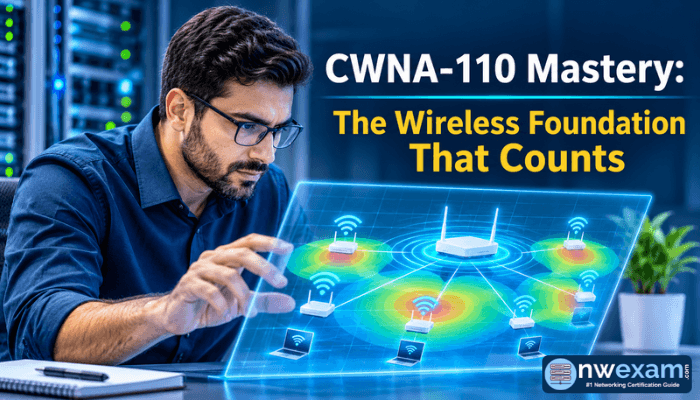
The CWNA-110 certification, offered by CWNP, stands as a fundamental credential for professionals aspiring to master enterprise Wi-Fi. This Certified Wireless Network Administrator (CWNA) exam validates a candidate's foundational knowledge across various wireless LAN technologies, from RF fundamentals and 802.11 standards to security and site surveying. It serves as a crucial stepping stone for network engineers, administrators, and IT managers looking to specialize in wireless networking. This article unveils the strategic preparation methods, career advantages, and essential insights that distinguish top wireless professionals in their pursuit of CWNA-110 success.
Defining the CWNA-110 Credential's Core Value
The CWNA-110 certification establishes a robust understanding of wireless networking principles, essential for anyone working with Wi-Fi infrastructure. This foundational credential validates a professional's competency in critical areas such as radio frequency (RF) behavior, antenna characteristics, spread spectrum technologies, and the intricate workings of the IEEE 802.11 standard. Achieving the CWNA-110 demonstrates a commitment to foundational excellence, signaling to employers a solid grasp of the technologies underpinning modern wireless networks. It's designed for individuals who manage, support, or design wireless networks and need to ensure optimal performance and security.
Why CWNA-110 is Indispensable for Wireless Careers
For many IT professionals, the CWNA-110 is the entry point into a specialized and highly demanded field. It covers the core knowledge necessary to troubleshoot, install, and configure wireless networks effectively. This includes understanding the impact of environmental factors on RF propagation, selecting appropriate antennas, and implementing robust security measures. The certification doesn't just teach theory; it equips candidates with the contextual understanding needed to apply best practices in real-world scenarios.
Foundational Competencies Validated by CWNA-110
The CWNA-110 exam rigorously tests a candidate's proficiency across several critical domains that form the bedrock of wireless technology. Success hinges on a comprehensive grasp of these areas, ensuring a well-rounded professional capable of addressing diverse wireless challenges. From the physical layer to basic security protocols, the exam covers what every wireless network administrator needs to know.
Mastering Core Wireless LAN Fundamentals
Candidates for the CWNA-110 certification must demonstrate a deep understanding of wireless LAN fundamentals. This includes the various components of a wireless network, such as access points, wireless clients, and WLAN controllers, as well as their interactions. A solid grasp of network topologies, frame types, and basic MAC layer operations is crucial.
-
IEEE 802.11 Standards: Understanding the evolution and specifics of 802.11 amendments is vital. This encompasses knowing different Wi-Fi generations (like 802.11ac, 802.11ax), their data rates, channel allocations, and modulation schemes.
-
Radio Frequency (RF) Fundamentals: RF theory is at the heart of wireless communication. CWNA-110 requires knowledge of RF signals, wavelength, frequency, amplitude, and phase. Concepts like decibels, EIRP, and link budget calculations are also important.
-
Antenna Concepts: The role of antennas in directing and shaping RF signals is a key component. Candidates must understand different antenna types (omnidirectional, directional), their characteristics (gain, beamwidth), and proper placement for optimal coverage.
Wireless Security and Site Survey Basics
Beyond the core physical layer, the CWNA-110 also delves into essential operational aspects. Wireless security concepts CWNP CWNA are integral, as securing Wi-Fi networks is paramount in today's threat landscape. Furthermore, practical skills like wireless site survey CWNA-110 are covered, which are fundamental for designing and maintaining efficient wireless environments.
Strategic Preparation for the CWNA-110 Exam
Effective preparation for the CWNA-110 exam demands a structured and comprehensive approach, moving beyond rote memorization to a true understanding of the subject matter. Top wireless professionals know that success on the CWNA-110 comes from a blend of dedicated study, practical application, and leveraging high-quality resources. A well-crafted CWNP CWNA-110 study guide plan is indispensable.
Developing Your CWNP CWNA-110 Study Guide Plan
Begin by thoroughly reviewing the CWNA-110 exam objectives available on the CWNP website. This outlines every topic that could appear on the exam. Create a study schedule that allocates sufficient time to each domain, prioritizing areas where your knowledge is weaker. Integrating different study methods can enhance retention.
-
Official Study Materials: Utilize the official CWNP study guide and curriculum as your primary resource. These materials are specifically designed to align with the exam objectives and provide the most accurate and in-depth information.
-
Video Training Courses: Complement your reading with video-based training from reputable instructors. Visual and auditory learning can clarify complex topics, particularly for RF fundamentals and intricate 802.11 standards.
-
Hands-on Labs and Simulations: Where possible, gain practical experience. Configuring wireless access points, analyzing RF spectrums with tools, or simulating network scenarios can solidify theoretical knowledge and prepare you for real-world application.
Leveraging Recommended Training Materials for CWNA-110
Beyond official guides, exploring supplementary resources can deepen your understanding. Look for books, articles, and whitepapers that offer additional perspectives on wireless LAN fundamentals CWNA-110. Engaging with online forums and communities dedicated to CWNP certifications can also provide valuable insights and peer support. For those seeking comprehensive preparation materials, exploring resources that offer varied learning methods can be incredibly beneficial for the CWNA-110 exam preparation.
Assessing Your Readiness with CWNA-110 Practice Questions
A crucial component of any successful CWNA-110 exam preparation strategy is the consistent use of practice questions. Engaging with CWNA-110 practice questions and answers not only helps to gauge your understanding of the material but also familiarizes you with the exam format and question types. This iterative process of testing, reviewing, and re-studying is what top wireless professionals rely on to build confidence and refine their knowledge.
The Role of CWNA-110 Sample Questions in Preparation
CWNA-110 sample questions are invaluable for identifying knowledge gaps. By simulating the actual exam experience, candidates can pinpoint specific topics where they need further study. It's not just about getting the right answer; it's about understanding *why* an answer is correct and *why* other options are incorrect. This deeper analytical approach transforms practice sessions into powerful learning opportunities.
Consider integrating a reputable platform offering sample practice questions to refine your understanding and test your readiness effectively. Focusing on the explanations for each answer helps consolidate knowledge rather than merely memorizing facts.
Effective Strategies for Utilizing Practice Tests
When using practice questions, treat each session like a real exam. Time yourself, avoid distractions, and review your performance thoroughly afterward. Pay close attention to questions that cover complex areas like 802.11 standards CWNA exam and RF fundamentals for CWNA. Track your progress over time to see improvement and ensure all exam objectives are covered. Consistent practice helps build endurance and reduces exam-day anxiety, contributing significantly to how to pass CWNA-110 exam successfully.
Understanding the CWNP Wireless Certification Path
The CWNA-110 certification is more than just a standalone credential; it is the fundamental entry point into a broader and highly respected CWNP wireless certification path. For professionals aiming for advanced roles in wireless networking, understanding this progression is key to strategic career development. CWNP's structured hierarchy allows individuals to continually deepen their expertise and specialize in various aspects of wireless technology.
Progressing Beyond CWNA-110
After achieving the Certified Wireless Network Administrator (CWNA), candidates can pursue higher-level certifications such as the Certified Wireless Security Professional (CWSP), Certified Wireless Design Professional (CWDP), Certified Wireless Analysis Professional (CWAP), and ultimately, the Certified Wireless Network Expert (CWNE). Each subsequent certification builds upon the CWNA-110 foundation, focusing on specific advanced skill sets. This structured learning provides clear milestones for professional growth and specialization. The official certification resources from CWNP offer comprehensive details on each level.
CWNP Certified Wireless Network Administrator Career Opportunities
The CWNA-110 opens doors to numerous career opportunities in a rapidly expanding field. Roles such as Network Administrator, Wireless Network Engineer, IT Support Specialist, and Systems Integrator frequently seek candidates with a solid CWNA foundation. As organizations increasingly rely on robust and secure wireless infrastructures, the demand for qualified professionals is consistently high. This certification validates the essential skills needed to contribute meaningfully to any organization's wireless strategy.
Maximizing Your Career Potential with CWNP CWNA Certification
The CWNP CWNA certification transcends mere technical validation; it significantly enhances a professional's market value and career trajectory. In a landscape increasingly reliant on flawless wireless connectivity, individuals holding the CWNA-110 possess a distinct advantage. This credential signals a foundational mastery that employers actively seek, leading to enhanced opportunities and professional recognition.
Realizing CWNP CWNA Certification Benefits
Achieving the CWNA-110 certification offers a multitude of benefits that extend beyond simply passing an exam. It validates a universal understanding of Wi-Fi principles, which are applicable across various vendor technologies. This vendor-neutral approach ensures that certified professionals are adaptable and proficient, regardless of the specific equipment they encounter.
-
Increased Employability: The CWNA is often a prerequisite or highly desired qualification for roles involving wireless network design, deployment, and troubleshooting.
-
Higher Earning Potential: Specialized skills in wireless networking frequently command better salaries compared to general IT roles, reflecting the critical nature of wireless infrastructure.
-
Professional Credibility: Holding a CWNP certification establishes you as a credible expert in wireless technology among peers and employers.
-
Enhanced Problem-Solving Skills: The comprehensive curriculum instills a deeper understanding that allows for more effective diagnosis and resolution of complex wireless issues.
Expanding CWNP Certified Wireless Network Administrator Career Opportunities
The skills gained through CWNA-110 are directly transferable to a wide array of industries, from enterprise IT and healthcare to education and retail. As wireless networks become more pervasive and complex, the demand for individuals capable of optimizing performance, ensuring security, and implementing cutting-edge solutions continues to grow. This certification acts as a catalyst for advancing into more specialized and leadership-oriented wireless roles within an organization.
Deciphering Key CWNA-110 Exam Objectives
To effectively prepare for and pass the CWNA-110 exam, a detailed understanding of its specific objectives is paramount. While a direct syllabus input was not provided, CWNP typically structures its exam objectives to cover the fundamental knowledge areas essential for a Certified Wireless Network Administrator. Focusing on these objectives ensures that preparation is targeted and efficient, addressing all potential exam topics comprehensively.
Key Domains Covered in CWNA-110
The exam objectives typically span several critical domains of wireless networking. These commonly include:
-
Radio Frequency (RF) Technologies and Concepts
-
Antenna Fundamentals
-
Wireless LAN Hardware and Software
-
Network Design, Installation, and Management
-
Wireless Network Security
-
Troubleshooting and Tools
Each of these domains encompasses various sub-topics, such as understanding different types of RF propagation, the impact of signal strength, various 802.11 physical layer mechanisms, and common wireless threats. A thorough review of these areas forms the core of an effective study strategy. For a more detailed breakdown, candidates should always refer to the detailed exam objectives document provided by CWNP.
Aligning Study with CWNA-110 Exam Objectives
Prospective candidates should meticulously align their CWNP CWNA-110 study guide with these objectives. This means not only understanding the concepts but also being able to apply them. For instance, knowing about different antenna types is one thing, but understanding which antenna to use for a specific wireless site survey CWNA-110 scenario and why is another. This application-oriented focus is critical for achieving CWNA-110 success.
Overcoming Common CWNA-110 Preparation Hurdles
Even the most seasoned IT professionals can encounter challenges when preparing for a rigorous certification like the CWNA-110. Recognizing these common hurdles and proactively addressing them is a hallmark of successful wireless experts. Strategic problem-solving during the study phase helps build resilience and ensures a smoother path to certification.
Navigating Complex RF Fundamentals and 802.11 Standards
One of the most frequent challenges in CWNA-110 exam preparation is grappling with the intricate details of RF fundamentals for CWNA and the expansive 802.11 standards. These topics require a conceptual understanding that often goes beyond simple memorization. Many candidates find the physics of radio waves and the nuances of various Wi-Fi amendments particularly demanding. Breaking down these complex subjects into smaller, digestible modules and reinforcing them with hands-on exercises or simulations can make a significant difference. Utilizing visual aids and interactive tools can also help simplify the abstract nature of RF propagation and channel planning.
Balancing Theory with Practical Application
Another hurdle lies in bridging the gap between theoretical knowledge and practical application. While the CWNA-110 is a foundational exam, it expects candidates to grasp how concepts translate into real-world wireless environments. Without direct experience in wireless site survey CWNA-110 or troubleshooting, some candidates might struggle with scenario-based questions. Supplementing study with virtual labs, case studies, and discussions with experienced wireless professionals can help develop this crucial contextual understanding. Engaging with CWNA-110 recommended training materials that include practical exercises is highly beneficial.
Securing a Strong Foundation in Wireless Security Concepts
In an era where data breaches are a constant threat, understanding and implementing robust wireless security concepts CWNP CWNA is not merely a beneficial skill—it is an absolute necessity. The CWNA-110 exam emphasizes this crucial domain, equipping certified professionals with the knowledge to safeguard wireless networks against various vulnerabilities and attacks. A strong grasp of security principles is vital for maintaining network integrity and protecting sensitive information.
Essential Wireless Security Protocols and Practices
The CWNA-110 curriculum typically covers the fundamentals of wireless security, including authentication, encryption, and various security protocols. Candidates must understand the differences between WEP, WPA, WPA2, and WPA3, recognizing their strengths, weaknesses, and appropriate use cases. Knowledge of enterprise security solutions, such as 802.1X with RADIUS, is also critical for implementing secure authentication mechanisms.
Key security areas include:
-
Authentication Methods: Understanding Personal (PSK) and Enterprise (802.1X/EAP) authentication, and their deployment scenarios.
-
Encryption Standards: Familiarity with TKIP, AES, and their roles in data confidentiality over wireless.
-
Threat Mitigation: Knowledge of common wireless attacks (e.g., rogue APs, denial-of-service, evil twin) and methods to prevent or detect them.
-
Security Best Practices: Implementing strong passwords, disabling WPS, and proper access point placement.
Integrating Security into Wireless Network Design
A top wireless professional understands that security is not an afterthought but an integral part of wireless network design and deployment. This involves designing networks with security zones, implementing proper segmentation, and ensuring that all wireless devices adhere to organizational security policies. The CWNA-110 exam reinforces the idea that a truly optimized wireless network is one that is both high-performing and inherently secure.
Implementing Effective Wireless Site Survey Techniques
A crucial skill for any Certified Wireless Network Administrator is the ability to conduct a thorough wireless site survey. The CWNA-110 emphasizes wireless site survey CWNA-110 techniques, recognizing that accurate planning is the cornerstone of a high-performing and reliable wireless network. Without a proper site survey, even the most advanced equipment can fall short of expectations, leading to poor coverage, low throughput, and frustrating user experiences.
Components of a Comprehensive Wireless Site Survey
An effective site survey involves more than just walking around with a laptop. It's a systematic process that includes:
-
Pre-survey Planning: Defining network requirements, understanding user density, identifying existing infrastructure, and gathering architectural blueprints.
-
RF Spectrum Analysis: Identifying sources of interference (e.g., microwaves, cordless phones) that can degrade Wi-Fi performance.
-
Data Collection: Using specialized software and hardware to measure signal strength (RSSI), signal-to-noise ratio (SNR), and identify optimal access point placement.
-
Post-survey Reporting: Documenting findings, recommending access point locations, antenna types, and channel plans to meet performance goals.
Optimizing Wireless Coverage and Capacity
The objective of a wireless site survey is to ensure adequate coverage and capacity throughout the desired area. This involves strategically placing access points to eliminate dead zones, minimize co-channel interference, and support the expected number of users and applications. Proficiency in these techniques, as covered by the CWNA-110, empowers professionals to design and deploy wireless networks that deliver consistent, high-quality connectivity.
Navigating 802.11 Standards for CWNA Success
The IEEE 802.11 standards form the bedrock of modern Wi-Fi technology, and a deep understanding of their intricacies is non-negotiable for CWNA-110 success. These standards define how wireless devices communicate, from the physical layer specifications to the media access control (MAC) layer operations. Mastering the evolution and specifics of 802.11 standards CWNA exam content is key to grasping how wireless networks function and how to optimize them.
Evolution and Key Amendments of 802.11
The 802.11 standard has evolved significantly since its inception, with numerous amendments (e.g., 802.11a/b/g/n/ac/ax) introducing new capabilities and improvements. For the CWNA-110, it's crucial to understand the fundamental differences between these generations, including their:
-
Operating frequencies (2.4 GHz, 5 GHz, 6 GHz)
-
Data rates and throughput enhancements
-
Modulation and coding schemes (MCS)
-
Spatial streams and MIMO/MU-MIMO technologies
-
Channel bandwidths and aggregation techniques
Understanding how these amendments build upon each other and impact network performance is vital. This knowledge directly influences decisions in network design and troubleshooting.
MAC Layer Operations and Efficiency
Beyond the physical layer, the 802.11 standards also define critical MAC layer operations. Concepts such as CSMA/CA (Carrier Sense Multiple Access with Collision Avoidance), Distributed Coordination Function (DCF), Point Coordination Function (PCF), and various frame types (management, control, data) are central to understanding how devices share the wireless medium efficiently. The CWNA-110 prepares candidates to interpret these operations, which is essential for diagnosing performance issues and optimizing wireless traffic flow.
Grasping RF Fundamentals for Optimal Wireless Performance
The invisible world of radio frequency (RF) is where wireless communication truly happens, and a solid command of RF fundamentals for CWNA is indispensable for any wireless professional. The CWNA-110 exam places significant emphasis on these concepts, recognizing that a deep understanding of RF behavior is critical for designing, deploying, and troubleshooting reliable Wi-Fi networks. Without this knowledge, optimizing wireless performance remains a guessing game.
Core RF Concepts for Wireless Engineers
RF fundamentals encompass a range of topics that explain how wireless signals propagate, interact with the environment, and are measured. Key concepts include:
-
Wavelength and Frequency: Understanding the relationship between these two properties and their implications for signal propagation.
-
Amplitude and Phase: How these characteristics encode data onto radio waves.
-
Decibels (dB) and Power Measurements: Interpreting various dB units (dBm, dBi, dBd, dBW) and understanding their application in link budget calculations.
-
Signal Propagation: How signals travel through space, including concepts like free space path loss, reflection, refraction, diffraction, and scattering.
-
Interference and Noise: Identifying sources of interference and understanding their impact on signal-to-noise ratio (SNR) and wireless performance.
Applying RF Principles to Wireless Network Design
The CWNA-110 curriculum ensures that candidates can apply these RF principles to practical scenarios. This includes understanding how building materials affect signal penetration, how antenna choice impacts coverage patterns, and how channel planning mitigates co-channel interference. Grasping RF fundamentals empowers professionals to make informed decisions that directly contribute to optimal wireless performance, security, and scalability.
Building a Robust CWNA-110 Study Guide Strategy
Developing an effective CWNA-110 study guide strategy is about more than just gathering materials; it's about structuring your learning to maximize retention and comprehension. A well-thought-out plan ensures that you cover all the necessary exam objectives systematically, building confidence and deepening your understanding of complex wireless topics. Top professionals approach their CWNP CWNA-110 study guide with a blend of discipline and adaptable methods.
Components of an Effective Study Strategy
A robust study guide strategy for the CWNA-110 should incorporate several key elements:
-
Objective-Driven Learning: Map your study materials directly to the CWNA-110 exam objectives. This ensures you're focusing on what will actually be tested.
-
Concept Reinforcement: Don't just read. Actively engage with the material through summarization, mind mapping, or teaching concepts to others.
-
Regular Review: Schedule consistent review sessions to revisit previously learned topics and solidify your memory. Spaced repetition can be particularly effective.
-
Mock Exam Practice: Integrate full-length mock exams to simulate the actual testing environment and manage your time effectively.
Adopting Best Practices for Learning Wireless Concepts
Learning complex subjects like wireless LAN fundamentals CWNA-110 and 802.11 standards requires patience and persistence. Break down large topics into smaller, manageable chunks. Use analogies to understand abstract concepts, especially in RF. Join study groups or online forums to discuss challenging areas and learn from the experiences of others. This holistic approach to the CWNP CWNA-110 study guide will prepare you thoroughly for the certification exam.
Evaluating CWNA-110 Exam Cost and Value Proposition
The decision to pursue a professional certification often involves a careful assessment of its cost versus its potential value and return on investment. The CWNA-110 exam cost is an important consideration for many candidates, but it should always be weighed against the significant career and skill benefits that the certification provides. Understanding this value proposition helps professionals make an informed decision about their investment in expertise.
Considering the Financial Investment in CWNA-110
The CWNA-110 exam typically incurs a fee, which can vary by region and testing center. Beyond the exam fee itself, candidates should also account for the cost of study materials, official training courses, and practice exams. While these expenses represent a financial outlay, they are an investment in specialized knowledge and professional growth.
The Long-Term Value of CWNA Certification
The value proposition of the CWNA-110 extends far beyond its immediate cost. This certification is a globally recognized credential that signifies foundational expertise in wireless networking, a skill set increasingly vital across all industries. Professionals holding the CWNA often see:
-
Improved job prospects and greater competitiveness in the job market.
-
Opportunities for higher salaries and career advancement into specialized wireless roles.
-
Enhanced credibility and recognition as a wireless subject matter expert.
-
A solid foundation for pursuing advanced CWNP certifications, further increasing earning potential and specialization.
When viewed through the lens of long-term career development and increased earning potential, the CWNA-110 exam cost becomes a strategic investment in a highly sought-after skill.
Conclusion
The CWNA-110 certification is more than just an exam; it's a gateway to mastering the complexities of modern wireless networks and unlocking significant career growth. Top wireless professionals understand that this credential validates a critical foundational skill set, providing the deep technical knowledge required to excel in wireless LAN fundamentals, 802.11 standards, RF principles, and robust security practices. By investing in thorough preparation and embracing continuous learning, candidates can successfully navigate the CWNA-110 exam and position themselves for a rewarding career in the dynamic world of wireless technology.
Are you ready to elevate your expertise and join the ranks of certified wireless professionals? Begin your journey with dedicated study and robust practice. Explore comprehensive certification resources and valuable practice opportunities to ensure you are fully prepared for success. Visit NWExam's CWNP resources to kickstart your CWNA-110 preparation today.
Frequently Asked Questions
1. What does the CWNA-110 certification validate?
The CWNA-110 certification validates a professional's foundational knowledge of enterprise Wi-Fi, encompassing RF fundamentals, 802.11 standards, wireless security, and site surveying techniques.
2. Who should pursue the CWNA-110 certification?
The CWNA-110 is ideal for network engineers, administrators, IT managers, and anyone involved in the installation, configuration, or troubleshooting of wireless LANs who seeks to establish a strong foundational understanding.
3. How important are practice questions for CWNA-110 preparation?
Practice questions are extremely important for CWNA-110 preparation as they help candidates assess their knowledge, identify weak areas, understand the exam format, and build confidence for the actual test.
4. What career opportunities can the CWNA-110 open?
The CWNA-110 can lead to career opportunities such as Wireless Network Administrator, Network Engineer, IT Support Specialist, or Systems Integrator, providing a solid foundation for specialized wireless roles.
5. Is the CWNA-110 a vendor-specific certification?
No, the CWNA-110 is a vendor-neutral certification, meaning the knowledge and skills it validates are applicable across various wireless equipment manufacturers and technologies, enhancing its universal value.
- Wi-Fi Admin Practice Test |
- CWNA Exam Questions |
- CWNP Certified Wireless Network Administrator |
- Wi-Fi Admin Certification Syllabus |
- CWNP Wireless Network Administrator |
- CWNP CWNA-110 CWNA Practice Test |
- CWNA-110 CWNA |
- CWNP CWNA-110 Practice Questions |
- CWNA-110 Online Test |
- CWNP Wi-Fi Admin Study Guide |
- CWNP Certification Practice Exam |
- CWNP CWNA Exam |
- CWNP CWNA-110 Practice Test |
- CWNP CWNA-110 Preparation |
- CWNP CWNA-110 Syllabus |
- CWNA-110 Exam Topics |
- CWNP CWNA-110 CWNA Exam Cost |
- CWNP CWNA-110 Passing Score |
- CWNP CWNA-110 Exam Duration |
- CWNP CWNA-110 Registration |
- CWNP CWNA-110 Sample Questions |
- CWNA-110 Exam Cost |
- CWNP CWNA-110 Exam Difficulty |
- CWNP CWNA-110 Question Bank |
- CWNA Certification Questions |
- CWNP Certified Wireless Network Administrator Exam Preparation |
- CWNA Sample Test |
- CWNP CWNA-110 Premium Practice Exam |
- CWNP CWNA-110 Online Practice Exam |
- CWNA Certification Overview


