
Palo Alto NetSec-Analyst: Your Cybersecurity Career's Power Play

The Palo Alto NetSec-Analyst certification, officially known as the Palo Alto Networks Certified Network Security Analyst (NetSec-Analyst), validates a professional's foundational knowledge and practical skills in managing, operating, and troubleshooting Palo Alto Networks' Next-Generation Firewalls. This credential is designed for security analysts, network engineers, and administrators who work with Palo Alto Networks security platforms and seek to demonstrate their proficiency in maintaining a robust security posture. Achieving this certification signifies a candidate's ability to effectively configure security policies, analyze network traffic, and respond to threats, making it a critical asset for cybersecurity professionals aiming for career advancement and enhanced operational impact.
Validating Essential Cybersecurity Competence
The NetSec-Analyst certification specifically targets the core competencies required to operate and manage Palo Alto Networks security solutions. It ensures that certified individuals possess the technical acumen to implement and maintain network security, a skill set increasingly vital in the evolving threat landscape. Professionals who hold this certification are equipped to handle day-to-day security operations, safeguarding organizational assets from sophisticated cyber threats. This foundational understanding acts as a springboard for more advanced roles within the cybersecurity domain, making it an excellent starting point or a solid enhancement for existing practitioners.
Who Benefits from NetSec-Analyst?
This certification is ideal for cybersecurity professionals, network administrators, and security operations center (SOC) analysts looking to specialize in Palo Alto Networks technologies. It's particularly beneficial for those responsible for deploying, configuring, monitoring, and troubleshooting Palo Alto Networks firewalls. The credential is also valuable for IT professionals seeking to validate their practical experience and theoretical knowledge in network security, enhancing their marketability in a competitive job market.
Navigating the NetSec-Analyst Exam Structure
Understanding the examination framework is crucial for effective preparation and successful certification. The Palo Alto NetSec-Analyst exam assesses candidates on a range of technical topics, ensuring comprehensive coverage of the skills required in a real-world security environment. Awareness of the format, duration, and scoring mechanisms allows candidates to approach the exam with confidence and a well-defined strategy.
The Palo Alto Network Security Analyst exam, coded NetSec-Analyst, is designed to evaluate a candidate's practical and theoretical understanding of Palo Alto Networks security platforms. Here are the key details:
-
Exam Price: The cost to attempt the exam is $250 USD, a standard investment for a valuable industry certification.
-
Duration: Candidates are allotted 90 minutes to complete the examination, requiring efficient time management.
-
Number of Questions: The exam comprises 60 questions, testing a broad spectrum of knowledge and application.
-
Passing Score: To achieve certification, a minimum score of 860 on a scale of 300 to 1000 is required, emphasizing thorough preparation.
This structure necessitates not only a deep understanding of the subject matter but also the ability to recall information and apply concepts quickly under timed conditions.
Mastering Core Security Operations and Configurations
The syllabus for the Palo Alto NetSec-Analyst exam is meticulously structured to cover the critical areas of network security analysis using Palo Alto Networks' solutions. Each section focuses on specific skill sets essential for effective threat prevention and network management. Candidates must delve into each topic to ensure they are fully prepared for the challenges presented in the examination.
The exam focuses on four key domains, each contributing a specific percentage to the overall score:
-
Object Configuration Creation and Application (30%): This domain covers the creation and application of various objects within the Palo Alto Networks firewall, such as addresses, services, applications, and security profiles. It requires candidates to understand how to define and utilize these objects to enforce security policies effectively.
-
Policy Creation and Application (30%): A significant portion of the exam focuses on the design, implementation, and application of security policies. This includes understanding security rules, NAT policies, decryption policies, and their hierarchical structure to control traffic flow and secure networks.
-
Management and Operations (26%): This section delves into the daily operational aspects of managing Palo Alto Networks devices. Topics include device administration, logging, reporting, software updates, and high availability configurations, ensuring that candidates can maintain and monitor the security infrastructure.
-
Troubleshooting (14%): Although a smaller percentage, troubleshooting is a critical skill. This domain assesses the ability to identify, diagnose, and resolve common issues related to network connectivity, policy enforcement, and application identification on Palo Alto Networks firewalls.
A balanced study approach, giving due attention to each domain's weightage, is vital for comprehensive preparation.
Accelerating Your Cybersecurity Career Trajectory
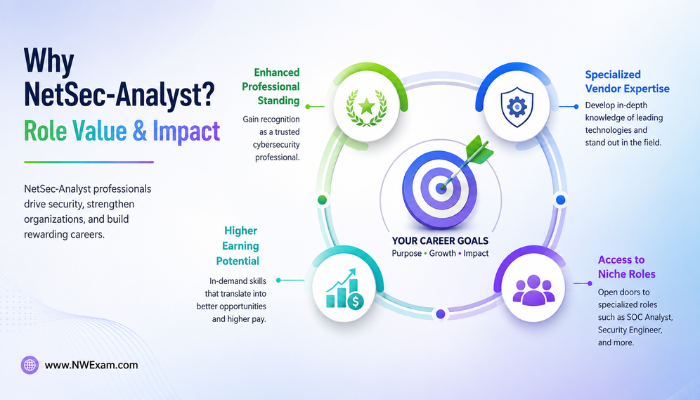
Earning the Palo Alto NetSec-Analyst certification is more than just adding a credential; it's a strategic move to solidify and advance your career in cybersecurity. In an industry where vendor-specific expertise is highly valued, this certification positions you as a knowledgeable professional capable of handling one of the leading next-generation firewall technologies. It opens doors to specialized roles and offers a clear path for professional growth.
Elevating Your Professional Standing
The demand for skilled cybersecurity professionals continues to outpace supply. Holding a specialized certification like Palo Alto NetSec-Analyst demonstrates a commitment to excellence and a practical understanding of cutting-edge security technologies. This can lead to increased recognition within your organization and the broader industry, enhancing your credibility and making you a more attractive candidate for employers. You can explore more about career benefits and study resources at the NetSec-Analyst exam readiness page.
Expected Compensation and Role Opportunities
Professionals certified in Palo Alto Networks technologies often command competitive salaries due to their specialized skills. While exact figures vary based on location, experience, and specific role, the NetSec-Analyst certification typically contributes to higher earning potential for roles such as:
-
Network Security Analyst: Responsible for monitoring security events, analyzing threats, and maintaining security systems.
-
Security Engineer: Involved in designing, implementing, and supporting security solutions, including firewalls.
-
Cybersecurity Consultant: Advising organizations on security best practices and implementing vendor-specific solutions.
-
Security Operations Center (SOC) Specialist: Focusing on incident response, threat detection, and security posture improvement.
This credential helps candidates secure roles that require hands-on experience with Palo Alto Networks, which is a significant advantage in the job market. For a comprehensive overview of the program's offerings and requirements, prospective candidates should consult the NetSec-Analyst datasheet.
Strategic Preparation for Success
Achieving the Palo Alto NetSec-Analyst certification demands a well-structured and consistent preparation strategy. Simply memorizing facts is often insufficient; candidates need to develop a deep conceptual understanding and practical application skills. A multi-faceted approach combining official resources, hands-on practice, and robust study materials is typically most effective.
Leveraging Official Training and Documentation
Palo Alto Networks provides extensive resources designed to help candidates prepare for their certifications. The official training courses offer structured learning paths that align directly with the exam syllabus. These courses often include lectures, labs, and practical exercises that reinforce theoretical knowledge. Additionally, the comprehensive documentation available from Palo Alto Networks, including administration guides and technical notes, serves as an invaluable reference. Reviewing these materials diligently ensures alignment with the vendor's best practices and exam expectations. Further insights and official details can be found on the Palo Alto Networks certification details page.
Essential Study Material and Practice
Beyond official training, supplementing your study with high-quality third-party resources is beneficial. Practice tests are particularly valuable as they simulate the actual exam environment and question types, helping candidates identify areas of weakness and improve time management. For instance, platforms like NWExam offer practice questions and simulated exams tailored to the Palo Alto NetSec-Analyst certification, helping candidates gauge their readiness effectively. Practical experience with Palo Alto Networks' Next-Generation Firewalls is non-negotiable; setting up a lab environment or utilizing virtual labs can significantly enhance understanding and skill application.
Effective Exam Prep Tips
Success in the NetSec-Analyst exam hinges on more than just knowledge. Strategic preparation also involves adopting smart study habits:
-
Create a Study Schedule: Allocate dedicated time slots for each syllabus domain, ensuring adequate coverage and review.
-
Hands-On Practice: Configure and troubleshoot firewalls in a lab environment. Practical application solidifies theoretical concepts.
-
Review Configuration Syntax: Familiarize yourself with command-line interface (CLI) commands and graphical user interface (GUI) navigation.
-
Practice Time Management: Work through sample questions under timed conditions to improve speed and accuracy.
-
Identify Weaknesses: Use practice test results to pinpoint areas where further study is needed and revisit those topics.
-
Understand Concepts, Not Just Answers: Focus on the 'why' behind each answer to truly grasp the underlying principles.
Adopting these tips can significantly increase your chances of passing the NetSec-Analyst exam on your first attempt, demonstrating your expertise in Palo Alto Networks security platforms.
Long-Term Value and Career Impact
The decision to pursue the Palo Alto NetSec-Analyst certification is an investment in your long-term career resilience and adaptability. Cybersecurity is a field characterized by rapid change, and specialized certifications like this demonstrate your capability to keep pace with evolving threats and technologies. It's a testament to your proactive approach to professional development and your commitment to securing the digital landscape.
The NetSec-Analyst certification not only validates your current skills but also lays a strong foundation for pursuing advanced Palo Alto Networks certifications, such as the PCNSE (Palo Alto Networks Certified Network Security Engineer). This establishes a clear career roadmap within the vendor's ecosystem, allowing you to continually upgrade your expertise and take on more complex security challenges. In an industry where continuous learning is paramount, this credential positions you for sustained success.
The Palo Alto NetSec-Analyst certification represents a significant achievement for any cybersecurity professional. It validates critical skills in managing and securing networks with Palo Alto Networks' leading technology, offering tangible benefits in career progression and earning potential. By investing in this credential, you are not only enhancing your current capabilities but also future-proofing your career in an ever-expanding and demanding field. The rigorous preparation required ensures a deep understanding of network security principles and their practical application, making certified individuals invaluable assets to any organization.
Embark on your journey to becoming a certified Palo Alto Networks expert. With dedicated effort and the right resources, the NetSec-Analyst certification is well within your reach, ready to empower your cybersecurity career. Begin your structured preparation today by exploring comprehensive study materials and practice exams designed to build your confidence and knowledge. Discover more about the Palo Alto NetSec-Analyst certification roadmap and take the definitive step towards mastering network security.
Frequently Asked Questions
1. What is the Palo Alto NetSec-Analyst certification?
The Palo Alto NetSec-Analyst certification validates cybersecurity analysis skills related to threat detection, network security operations, and Palo Alto Networks technologies.
2. How hard is the Palo Alto NetSec-Analyst exam?
The exam is moderately challenging because it focuses on practical security analysis and operational understanding rather than memorization alone.
3. What is the best study material for Palo Alto NetSec-Analyst?
The best preparation includes official training, exam blueprints, hands-on labs, and realistic practice tests.
4. Is the Palo Alto NetSec-Analyst certification worth it?
Yes. It can improve cybersecurity job opportunities, validate operational skills, and strengthen career advancement potential.
5. How long should I study for the NetSec-Analyst exam?
Most candidates prepare for 6–10 weeks depending on their cybersecurity background and available study time.
6. Are practice tests important for the exam?
Yes. Practice tests improve confidence, identify weak areas, and help candidates understand exam patterns.
7. What jobs can I get after certification?
Certified professionals often pursue SOC analyst, security analyst, threat analyst, and incident response roles.
8. Does the certification require prior experience?
Prior networking or security experience helps, but motivated beginners can still succeed with structured preparation and hands-on practice.
- NetSec-Analyst |
- NetSec-Analyst Certification Mock Test |
- Palo Alto NetSec-Analyst Certification |
- NetSec-Analyst Mock Exam |
- NetSec-Analyst Practice Test |
- Palo Alto NetSec-Analyst Primer |
- NetSec-Analyst Question Bank |
- NetSec-Analyst Simulator |
- Palo Alto NetSec-Analyst Question Bank |
- NetSec-Analyst Exam Questions |
- Palo Alto NetSec-Analyst Questions |
- Palo Alto Network Security Analyst |
- Palo Alto NetSec-Analyst Practice Test |
- Palo Alto Networks Certified Network Security Analyst |
- NetSec-Analyst Syllabus |
- NetSec-Analyst Books |
- NetSec-Analyst Certification Cost |
- NetSec-Analyst Certification Syllabus |
- Palo Alto NetSec-Analyst Training |
- Palo Alto NetSec-Analyst Books |
- NetSec-Analyst Sample Questions |
- Palo Alto NetSec-Analyst Practice Test Free |
- NetSec-Analyst Certification Questions and Answers |
- NetSec-Analyst Certification Sample Questions


