
Conquer FCP_FMG_AD-7.6: The Definitive Expert Guide

The Fortinet NSE 5 - FortiManager 7.6 Administrator (FCP_FMG_AD-7.6) certification validates a professional's expertise in centrally managing Fortinet security devices, making it a critical credential for network and security administrators. This exam specifically focuses on the FortiManager 7.6 platform, equipping candidates with the skills to configure, monitor, and troubleshoot complex Fortinet Security Fabric deployments. Professionals aiming to streamline their Fortinet environment, enhance operational efficiency, and maintain robust security postures across an enterprise network should target this certification. This comprehensive guide delves into the exam's structure, essential syllabus topics, and effective preparation strategies to ensure candidates are well-prepared for success.
Understanding the FCP_FMG_AD-7.6 Certification Program
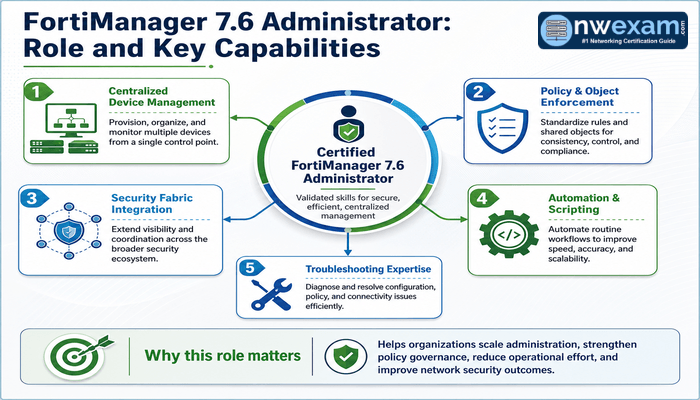
The Fortinet Certified Professional (FCP) program, specifically the FortiManager Administrator track, signifies a deep understanding of FortiManager's capabilities in centralized management. Achieving the FCP_FMG_AD-7.6 certification demonstrates a candidate's ability to implement and maintain FortiManager in a production environment, covering everything from initial setup to advanced configuration and troubleshooting. This credential is an essential step for individuals responsible for managing multiple FortiGate devices, FortiAPs, and FortiSwitches, ensuring consistent policy enforcement and streamlined operations across the entire Fortinet security infrastructure.
This certification is designed for network and security professionals who deploy and manage FortiManager, or those aspiring to administer Fortinet’s centralized management solutions. It solidifies a professional's foundational knowledge and practical skills required to excel in managing complex Fortinet Security Fabric environments, addressing a critical need for efficient and scalable security operations. Moreover, successful candidates demonstrate proficiency in using FortiManager to automate tasks and ensure compliance.
Examining the FCP_FMG_AD-7.6 Structure
Gaining insight into the examination structure is paramount for effective preparation. The FCP_FMG_AD-7.6 exam is designed to rigorously test a candidate's practical and theoretical understanding of FortiManager 7.6 administration. Successful navigation of this exam requires not only knowing the concepts but also understanding how they apply in real-world Fortinet deployments. This includes familiarity with FortiManager's interfaces, command-line tools, and integration points within the broader Fortinet Security Fabric.
The key details for the FCP_FMG_AD-7.6 examination are as follows:
-
Exam Name: Fortinet NSE 5 - FortiManager 7.6 Administrator
-
Exam Code: FCP_FMG_AD-7.6
-
Exam Price: $200 USD
-
Duration: 70 minutes
-
Number of Questions: 30-40 multiple-choice questions
-
Passing Score: Pass / Fail determination
This structure necessitates efficient time management and a solid grasp of all syllabus areas to answer questions accurately within the allotted time. Candidates should anticipate questions that evaluate both conceptual knowledge and practical scenario application.
Comprehensive Review of FortiManager 7.6 Syllabus Topics
The FCP_FMG_AD-7.6 exam syllabus covers the core functionalities and advanced features of FortiManager 7.6, crucial for centralized management of Fortinet products. A thorough understanding of each topic is vital, as the exam assesses both theoretical knowledge and practical application. These topics collectively ensure that certified professionals can proficiently handle all aspects of FortiManager administration, from initial setup to ongoing maintenance and troubleshooting.
The syllabus for the Fortinet NSE 5 - FortiManager 7.6 Administrator exam includes:
-
Administration: Covers FortiManager setup, system settings, and general administrative tasks.
-
Device manager: Focuses on adding and managing FortiGate devices, device groups, and ADOMs (Administrative Domains).
-
Policy and objects: Deals with creating, managing, and assigning firewall policies, objects, and VPN configurations.
-
Advanced configuration: Explores features like script automation, FortiGuard integration, and custom ADOMs.
-
Troubleshooting: Encompasses methods for diagnosing and resolving common issues within FortiManager and managed devices.
Each of these domains forms a critical part of a FortiManager administrator's daily responsibilities, highlighting the exam's practical relevance. Mastering these areas will enable candidates to effectively manage and secure complex network infrastructures using Fortinet solutions. For more in-depth study, candidates can refer to the official FortiManager exam page to access the detailed curriculum.
Maximizing FortiManager 7.6 Management Skills
Achieving the FCP_FMG_AD-7.6 certification requires more than just memorizing facts; it demands practical proficiency in FortiManager 7.6 administration skills. Candidates must be able to confidently configure device settings, manage administrative domains (ADOMs), and deploy policy packages effectively. This involves hands-on experience with the FortiManager GUI and CLI to perform routine tasks and implement complex configurations. Real-world scenarios are often reflected in exam questions, testing the ability to apply knowledge under practical constraints.
Implementing Centralized Configuration
Centralized management through FortiManager is a cornerstone of efficient Fortinet Security Fabric administration. This involves tasks such as:
-
Device Enrollment: Adding FortiGate devices to FortiManager for unified control.
-
ADOM Management: Organizing devices into Administrative Domains for delegated administration and segmentation.
-
Policy and Object Deployment: Creating and pushing firewall policies, NAT policies, and security profiles consistently across multiple FortiGate units.
-
Firmware Management: Managing and deploying firmware updates across managed devices from a central location.
These actions ensure uniform security policies and configurations, reducing the risk of misconfigurations and enhancing overall security posture.
Leveraging Automation and Scripting
FortiManager's capability to automate tasks is crucial for large-scale deployments and maintaining operational efficiency. This includes:
-
Script Execution: Utilizing command scripts to configure multiple devices simultaneously or automate repetitive tasks.
-
API Integration: Integrating FortiManager with other systems using its API for advanced automation workflows.
-
Change Management: Tracking configuration changes, reviewing revision histories, and implementing granular rollbacks when necessary.
Proficiency in these areas significantly contributes to a more agile and responsive security infrastructure.
Adopting an Effective FCP_FMG_AD-7.6 Study Regimen
Preparing for the FCP_FMG_AD-7.6 exam demands a structured and consistent approach. Simply reviewing official documentation is often insufficient; a multi-faceted strategy that combines theoretical study with practical application is most effective. Candidates should allocate dedicated time for each syllabus domain, ensuring a deep understanding rather than superficial knowledge. The goal is to build a robust skill set that can tackle diverse FortiManager challenges, not just pass the exam.
Strategic Learning Resources
A variety of resources can support your preparation journey for the Fortinet NSE 5 FortiManager 7.6. These include:
-
Official Fortinet Documentation: The primary source for accurate and detailed information on FortiManager 7.6 features and functionalities.
-
Fortinet Training Courses: Specialized courses offered by Fortinet that delve into the exam topics with hands-on labs.
-
Virtual Labs: Setting up a home lab environment or utilizing cloud-based lab services to practice configurations and troubleshooting scenarios.
-
Online Communities: Engaging with fellow candidates and experts in forums or study groups can provide valuable insights and alternative perspectives.
Complementing these resources with regular review sessions can reinforce learning and aid retention.
Practical Readiness with Practice Exams
To solidify your understanding and gauge your readiness, taking practice exams is invaluable. They help you:
-
Familiarize with Format: Understand the question types, pacing, and overall structure of the actual exam.
-
Identify Weaknesses: Pinpoint areas where further study is required based on performance in different domains.
-
Build Confidence: Reduce exam anxiety by simulating the test environment and building confidence in your knowledge.
Utilizing quality study materials and practice tests, such as those found at Fortinet FCP_FMG_AD-7.6 sample questions, can significantly enhance your preparation and increase your chances of success. It is crucial to remember that practice questions should be used to understand concepts, not to memorize answers, promoting ethical and thorough preparation.
Connecting FortiManager with the Security Fabric
The FortiManager 7.6 Administrator certification emphasizes the integral role FortiManager plays within the broader Fortinet Security Fabric. Candidates must understand how FortiManager not only centrally manages devices but also integrates seamlessly to provide a unified, automated, and intelligent security posture. This involves configuring and monitoring various components that contribute to the fabric's overall strength and responsiveness.
Understanding Fabric Connectors
FortiManager acts as a central orchestrator within the Security Fabric. Key integrations include:
-
FortiAnalyzer Integration: Sending logs and security events to FortiAnalyzer for comprehensive reporting and analysis.
-
FortiAuthenticator Integration: Managing user authentication policies and access control across the fabric.
-
API for Automation: Leveraging FortiManager's API to integrate with third-party orchestration tools for enhanced automation.
These connections enable a holistic view and control over the entire security infrastructure.
Ensuring Policy Compliance and Auditing
Maintaining compliance with security policies and regulatory standards is a critical aspect of Fortinet security fabric administration FortiManager. Professionals are expected to use FortiManager to:
-
Policy Consistency: Ensure all managed FortiGate devices adhere to a unified set of security policies.
-
Compliance Checks: Run audits and reports to verify policy adherence and identify deviations.
-
Configuration Backup and Restore: Implement robust backup strategies for device configurations to facilitate quick recovery and compliance auditing.
This proactive approach helps prevent security breaches and ensures regulatory compliance. Understanding the broader Fortinet ecosystem, including other FCP-level certifications, can be beneficial, such as those explored on the Fortinet Secure Networking certification page.
Benefits of Fortinet NSE 5 FortiManager 7.6 Certification
Earning the Fortinet NSE 5 FortiManager 7.6 certification provides tangible advantages for IT professionals seeking to advance their careers in cybersecurity. It serves as a testament to specialized skills, enhancing credibility and opening doors to more challenging and rewarding roles. Beyond individual career growth, certified professionals contribute significantly to their organizations by improving security operations and efficiency.
Professional Growth and Recognition
The FCP_FMG_AD-7.6 certification is highly valued in the industry for several reasons:
-
Enhanced Credibility: Demonstrates a proven skill set in a critical area of network security.
-
Career Advancement: Qualifies individuals for roles such as Network Security Administrator, Security Engineer, or Fortinet Specialist.
-
Competitive Edge: Differentiates certified professionals in a crowded job market.
-
Industry Recognition: Fortinet certifications are globally recognized and respected within the cybersecurity community.
This credential confirms a professional's commitment to continuous learning and excellence in network security.
Organizational Impact and Efficiency
Certified FortiManager administrators bring significant value to their organizations by:
-
Streamlining Operations: Implementing efficient centralized management reduces manual effort and potential errors.
-
Improving Security Posture: Ensuring consistent policy enforcement and rapid response to security incidents.
-
Optimizing Resource Utilization: Leveraging FortiManager features to automate tasks and manage resources more effectively.
-
Facilitating Scalability: Enabling organizations to expand their Fortinet deployments with manageable, centralized control.
These contributions lead to a more secure, efficient, and resilient network infrastructure.
Effective Troubleshooting in FortiManager 7.6
Troubleshooting is an indispensable skill for any FortiManager 7.6 Administrator. The exam covers this area extensively, expecting candidates to demonstrate the ability to diagnose and resolve various issues related to device management, policy deployment, and Security Fabric integration. A systematic approach to problem-solving, coupled with a deep understanding of FortiManager's logging and diagnostic tools, is essential for maintaining optimal system performance.
Diagnosing Connectivity and Device Issues
Common troubleshooting scenarios involve connectivity problems or device synchronization failures. Administrators must be able to:
-
Verify Device Connectivity: Check communication between FortiManager and managed devices using ping, traceroute, and FortiManager's device health status.
-
Analyze ADOM and Device Group Configuration: Ensure devices are correctly assigned to ADOMs and device groups, and that appropriate permissions are in place.
-
Review Device Synchronization: Investigate reasons for synchronization failures and apply corrective measures to ensure devices are up-to-date with FortiManager configurations.
These initial steps are crucial for isolating the root cause of many operational problems.
Resolving Policy and Configuration Discrepancies
Policy conflicts or configuration discrepancies can lead to unexpected network behavior or security gaps. Effective troubleshooting in this area includes:
-
Policy Conflict Resolution: Identifying and resolving overlapping or conflicting firewall policies using FortiManager's policy tools.
-
Configuration Drift Analysis: Comparing device configurations with FortiManager's database to identify and reconcile differences.
-
Log Analysis: Utilizing FortiManager's event logs and FortiGate logs (via FortiAnalyzer if integrated) to trace policy application issues and identify errors.
A proactive approach to identifying and resolving these issues ensures that security policies are consistently applied and effective across the entire network.
Conclusion
The Fortinet NSE 5 - FortiManager 7.6 Administrator certification (FCP_FMG_AD-7.6) is a vital credential for professionals seeking to master centralized security management with Fortinet technologies. By providing an in-depth understanding of FortiManager 7.6, the exam prepares individuals to tackle complex network security challenges, streamline operations, and reinforce the Fortinet Security Fabric. The journey to certification demands thorough preparation, combining official study materials with hands-on practice, focusing on both theoretical concepts and their practical application.
Embark on your journey to FCP_FMG_AD-7.6 certification with confidence. Enhance your preparation by exploring comprehensive study resources and practice questions designed to mimic the real exam environment. Start building your expertise in FortiManager 7.6 administration and advance your career in cybersecurity. Find further details and resources to aid your exam readiness by visiting Fortinet certification details.
Frequently Asked Questions
1. What skills does the FCP_FMG_AD-7.6 certification validate?
The FCP_FMG_AD-7.6 certification validates a professional's ability to centrally manage Fortinet security devices, including configuring, monitoring, and troubleshooting FortiManager 7.6 in complex Fortinet Security Fabric deployments.
2. Who should pursue the Fortinet NSE 5 FortiManager 7.6 Administrator certification?
This certification is ideal for network and security administrators, security engineers, or any IT professional responsible for deploying, managing, and maintaining Fortinet FortiManager 7.6 in an enterprise environment.
3. What is the format of the FCP_FMG_AD-7.6 exam?
The FCP_FMG_AD-7.6 exam typically consists of 30-40 multiple-choice questions, has a duration of 70 minutes, and is graded as pass or fail, without a specific numerical passing score provided to candidates.
4. How long is the Fortinet FCP_FMG_AD-7.6 certification valid?
Fortinet certifications generally have a validity period, typically two years. To maintain certified status, professionals usually need to recertify by passing a current version of the exam or a higher-level Fortinet exam.
5. What are the career benefits of achieving FCP_FMG_AD-7.6?
Achieving FCP_FMG_AD-7.6 enhances professional credibility, opens doors to advanced roles in network security, provides a competitive edge in the job market, and demonstrates a commitment to mastering Fortinet security solutions, leading to better career opportunities.
- FortiManager Administrator Certification Mock Test |
- Fortinet FortiManager Administrator Certification |
- FortiManager Administrator Mock Exam |
- FortiManager Administrator Practice Test |
- Fortinet FortiManager Administrator Primer |
- FortiManager Administrator Question Bank |
- FortiManager Administrator Simulator |
- FortiManager Administrator Exam Questions |
- Fortinet FortiManager Administrator Questions |
- Fortinet FortiManager Administrator Practice Test |
- FortiManager Administrator Books |
- FortiManager Administrator Certification Cost |
- FortiManager Administrator Certification Syllabus |
- Fortinet FortiManager Administrator Training |
- Fortinet FortiManager Administrator Books |
- FortiManager Administrator Sample Questions |
- FortiManager Administrator Certification Questions and Answers |
- FortiManager Administrator Certification Sample Questions |
- FCP_FMG_AD-7.6 |
- FCP_FMG_AD-7.6 Syllabus |
- Fortinet FCP_FMG_AD-7.6 Books |
- Fortinet FCP_FMG_AD-7.6 Practice Test Free


