
FortiDLP Admin Certification: Why Most Prep Misses Key Concepts

The Fortinet NSE 6 - FortiDLP 26 Administrator certification, identified by exam code NSE6_DLP_AD-26, validates an individual’s advanced skills in implementing, configuring, and managing Fortinet’s Data Loss Prevention (DLP) solutions. This credential is vital for cybersecurity professionals dedicated to protecting sensitive organizational data from exfiltration and misuse. Candidates pursuing this FortiDLP Administrator certification often focus heavily on surface-level configurations, inadvertently missing the critical conceptual understanding required for true mastery and exam success. This advanced guide will delve into these crucial, often overlooked aspects, providing a comprehensive strategy for passing the NSE6_DLP_AD-26 Fortinet certification syllabus and excelling in the FortiDLP administrator job role.
Examining the Fortinet NSE 6 - FortiDLP 26 Administrator Credential
The Fortinet NSE 6 - FortiDLP 26 Administrator certification is a pivotal step for professionals aiming to solidify their expertise in data loss prevention within the Fortinet ecosystem. This exam assesses a candidate's ability to effectively deploy, manage, and troubleshoot FortiDLP solutions. Understanding the foundational structure of the examination is the first step towards a targeted preparation approach, ensuring no aspect of the assessment catches you off guard.
Key details for the NSE6_DLP_AD-26 exam include:
-
Exam Name: Fortinet NSE 6 - FortiDLP 26 Administrator
-
Exam Code: NSE6_DLP_AD-26 FortiDLP Administrator
-
Duration: 60-70 minutes
-
Number of Questions: 30-40
-
Passing Score: Pass / Fail
-
Exam Price: $200 USD
Achieving this certification demonstrates a professional's capacity to design, implement, and maintain robust data loss prevention strategies using Fortinet technologies, a skill set increasingly critical in today's regulated and threat-laden digital landscape.
Deconstructing the NSE6_DLP_AD-26 FortiDLP Administrator Certification Syllabus
A deep understanding of the NSE6_DLP_AD-26 Fortinet certification syllabus is paramount for effective preparation, allowing candidates to prioritize study efforts and grasp the proportionate importance of each domain. The syllabus is structured into distinct thematic areas, each contributing a specific percentage to the overall exam score. Many preparation strategies overlook the nuanced interplay between these topics, focusing instead on isolated concepts.
The primary domains covered by the exam include:
-
FortiDLP fundamentals and deployment (25-35%): This section covers the core architecture, installation procedures, initial configuration, and integration of FortiDLP appliances within a network. It's crucial to understand not just the steps but the 'why' behind each decision in a deployment scenario.
-
Data identification and enforcement (20-30%): Focuses on how FortiDLP identifies sensitive data using various methods, including file types, patterns, and dictionaries, and how it enforces policies to prevent data exfiltration. This involves a deep dive into creating and refining detection rules.
-
Detection and investigation (15-25%): This domain addresses the monitoring capabilities of FortiDLP, how to analyze detected incidents, and the process of investigating potential data breaches or policy violations. Understanding the alert mechanisms and reporting features is key here.
-
Troubleshooting (15-25%): This segment evaluates a candidate's ability to diagnose and resolve common issues encountered during FortiDLP deployment and operation, ranging from policy misconfigurations to connectivity problems. Practical problem-solving skills are heavily tested.
Candidates must not only memorize the features but internalize how each component functions within a holistic data protection strategy, enabling them to tackle scenario-based questions effectively.
Realizing the Value of FortiDLP Administrator Certification
Obtaining the FortiDLP Administrator certification signifies a professional's validated expertise in a critical area of cybersecurity. Beyond personal skill enhancement, the benefits of Fortinet NSE 6 FortiDLP certification extend to organizational data security, compliance adherence, and career progression. In an era where data breaches can lead to catastrophic financial and reputational damage, the role of a proficient FortiDLP administrator is indispensable. This certification enhances an individual's credibility, making them a key asset in any organization striving for robust data loss prevention.
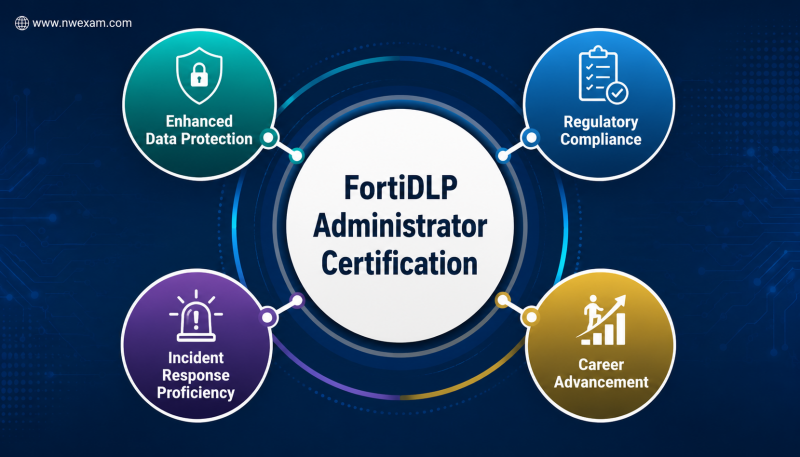
The certification directly addresses the growing demand for professionals who can manage and mitigate sophisticated data exfiltration attempts. It equips administrators with the ability to:
-
Architect and implement comprehensive DLP strategies using FortiDLP.
-
Ensure compliance with stringent regulatory frameworks such as GDPR, HIPAA, and PCI DSS by safeguarding sensitive information.
-
Proactively identify and prevent data leaks, thereby protecting intellectual property and customer privacy.
-
Respond swiftly and effectively to DLP incidents, minimizing potential damage.
Professionals holding this credential demonstrate a commitment to securing critical digital assets, aligning with the strategic goals of modern enterprises to achieve critical data security skills. This makes the Fortinet Data Loss Prevention (DLP) certification a significant differentiator in the competitive cybersecurity job market.
Navigating FortiDLP Fundamentals and Deployment Complexities
The "FortiDLP fundamentals and deployment" domain, accounting for 25-35% of the exam, often traps candidates who underestimate its depth. It's not merely about knowing where to click, but understanding the architectural implications and optimal deployment strategies. Many study methods only scratch the surface of initial setup, missing crucial conceptual links that are vital for both exam success and real-world proficiency.
Grasping Foundational Architecture and Integration
A common oversight is the failure to deeply understand the FortiDLP architecture, including its components like the inspection engine, content processors, and database. Simply knowing that FortiDLP sits in-line or out-of-band is insufficient. Candidates must grasp the flow of data through the appliance, how various network topologies affect deployment, and the implications of integration with other Fortinet security fabric components like FortiGate and FortiAnalyzer. Without this holistic view, troubleshooting and optimization become challenging guesswork.
Beyond Basic Configuration: Operationalizing Deployment
Initial configuration covers setting up interfaces, network zones, and basic administrative access. However, the expert-level understanding demanded by the FortiDLP Administrator certification extends to operational considerations. This includes mastering topics such as high availability (HA) configurations, performance tuning for different traffic volumes, and resource allocation strategies. Many prep materials list configuration steps without explaining the rationale or best practices behind them, leading to a superficial understanding that fails to address complex deployment scenarios in the exam.
Deepening Data Identification and Enforcement Understandings
The "Data identification and enforcement" section, comprising 20-30% of the exam, requires more than just memorizing policy actions. It demands a nuanced understanding of how FortiDLP precisely identifies sensitive content and rigorously applies prevention measures. Many candidates struggle here because their preparation focuses on generic DLP rules rather than the specific, sophisticated methods FortiDLP employs.
Precision in Data Classification Techniques
Effective data identification goes beyond simple keyword matching. The exam expects candidates to be proficient in leveraging FortiDLP’s advanced classification techniques. This includes understanding the intricacies of built-in dictionaries, creating custom dictionaries for industry-specific data, and utilizing regular expressions (regex) for pattern matching with high accuracy. A key area where prep often misses is the practical application of these techniques to minimize false positives and false negatives, which are critical in a production environment. For example, knowing how to construct a regex to detect a specific national ID format, or how to combine multiple dictionaries for complex data types, is more valuable than just listing the features.
Refining Policy Creation and Management Logic
FortiDLP policy creation and management is at the core of data enforcement. It involves understanding the hierarchy of policies, the impact of policy ordering, and the various actions that can be taken (e.g., block, log, archive, quarantine, encrypt). A common pitfall is overlooking the logical flow and dependencies between different policy elements, such as content inspection profiles, destination profiles, and user groups. Expert preparation involves practicing scenario-based policy design, considering how different policy components interact to achieve specific data protection goals without disrupting legitimate business operations. The exam often presents complex scenarios where subtle policy misconfigurations can lead to significant security gaps or operational disruptions, testing a candidate's ability to foresee such outcomes.
Optimizing Detection and Investigation Protocols
The "Detection and investigation" segment, contributing 15-25% to the exam, focuses on the post-detection phase of DLP. While many candidates can identify a DLP incident, few understand the full scope of FortiDLP's capabilities for detailed analysis and effective response. True expertise lies in leveraging the platform's features to quickly assess the severity, scope, and root cause of a data leak.
Advanced Incident Response and Reporting
FortiDLP incident response and reporting is a critical skill for any administrator. It’s not enough to simply know that FortiDLP logs incidents; a proficient administrator must be able to interpret those logs, correlate events, and generate meaningful reports for auditing and compliance. This involves understanding the various logging levels, how to filter and sort incidents, and configuring alert mechanisms to notify appropriate personnel. Many preparation guides gloss over the analytical aspects, focusing only on basic reporting. The exam often probes into scenarios requiring forensic analysis of incident details, understanding the context of a potential breach, and determining the appropriate next steps beyond simply blocking traffic.
Leveraging Analytics for Proactive Data Security
Beyond reactive incident handling, FortiDLP offers robust analytical tools that can provide insights into data usage patterns and potential risks. An expert administrator uses these insights to proactively refine policies and improve the overall data security posture. This involves understanding how to utilize FortiAnalyzer integration for advanced logging and reporting, creating custom dashboards to monitor key DLP metrics, and identifying trends in policy violations. Candidates should focus on how to transform raw incident data into actionable intelligence, a concept often missed by those who view DLP purely as a blocking mechanism. Recognizing patterns of internal policy violations or external exfiltration attempts is key to hardening an organization’s defenses.
Systematically Approaching FortiDLP Troubleshooting Scenarios
The "Troubleshooting" section, also accounting for 15-25% of the exam, is where many candidates find themselves underprepared. Effective troubleshooting requires a systematic approach, diagnostic skills, and a deep understanding of how FortiDLP components interact. Rote memorization of error codes is rarely sufficient; the exam demands the ability to apply logical deduction to complex operational issues, often a weak point in typical preparation.
Diagnosing Common Deployment and Policy Issues
Troubleshooting FortiDLP deployments involves understanding a range of potential issues, from network connectivity problems affecting traffic inspection to misconfigured policies leading to unintended blocks or allowed data transfers. Candidates frequently struggle with correlating symptoms to root causes because they lack a solid grasp of the system's operational flow. This includes diagnosing issues with content inspection profiles, verifying dictionary matches, and identifying conflicts within policy rules. Expert preparation necessitates a focus on simulating common errors and understanding the diagnostic tools available within the FortiDLP interface, such as log viewers and policy hit counters. Overlooking these practical diagnostic techniques can significantly hinder performance in this exam domain.
Resolving Integration Challenges with Fortinet Security Fabric
FortiDLP often operates as part of a larger Fortinet Security Fabric. Troubleshooting therefore extends to resolving integration challenges with other Fortinet products like FortiGate for traffic redirection or FortiAnalyzer for centralized logging. Issues related to SNMP, Syslog, and API communications can impact the overall effectiveness of the DLP solution. Many study materials do not adequately cover the interdependencies between these components, leaving candidates unprepared for scenarios where a problem originates outside the FortiDLP appliance itself. Mastering these complex interactions is crucial, as the exam will likely feature questions that require an understanding of cross-product diagnostics to fully resolve issues, reflecting the comprehensive nature of FortiDLP 26 Administrator exam information.
Forging an Effective Preparation Plan for NSE6_DLP_AD-26
Successful navigation of the NSE6_DLP_AD-26 Fortinet certification syllabus requires a well-structured and comprehensive preparation strategy that goes beyond mere content review. Many candidates fall short by relying solely on passive learning or outdated resources. An effective plan for how to pass Fortinet NSE 6 FortiDLP exam involves a multi-faceted approach, integrating official training with hands-on experience and targeted practice.
Leveraging Official FortiDLP Administrator Certification Training and Study Material
The foundation of your preparation should be the official Fortinet NSE 6 FortiDLP training course and recommended Fortinet NSE 6 - FortiDLP 26 Administrator study material. These resources are designed to align directly with the exam objectives and provide the most accurate and up-to-date information. Beyond theoretical knowledge, focus on the practical exercises and labs included in these materials. Understanding concepts in isolation is less effective than applying them in simulated environments. Look for official documentation, whitepapers, and guides that delve into specific functionalities, architecture, and best practices. These often contain crucial details that might be summarized in broader training modules, yet are critical for the exam's in-depth questions.
The Imperative of Hands-On Experience for FortiDLP Administrator Certification
No amount of reading can replace practical experience with FortiDLP appliances. Setting up a lab environment, even a virtual one, to practice deployment, configuration, policy creation, and troubleshooting is invaluable. Experiment with different data classification methods, create complex policy rules, and intentionally introduce errors to practice diagnostic skills. This active learning approach reinforces theoretical knowledge and builds the intuitive understanding necessary for scenario-based exam questions. Hands-on labs solidify the concepts of FortiDLP implementation and configuration guide, moving knowledge from abstract to actionable. This direct engagement helps uncover the nuances that paper-based study often misses, such as the subtleties of policy evaluation order or the impact of different content profiles.
Strategic Use of FortiDLP Administrator Practice Questions
Integrating Fortinet NSE 6 - FortiDLP 26 Administrator practice questions into your study routine is crucial for gauging readiness and identifying weak areas. Practice questions not only familiarize you with the exam format but also highlight concepts that require further review. Focus on understanding the reasoning behind correct answers, rather than just memorizing the solutions. High-quality practice tests, such as those available on NWExam's sample practice questions, can simulate the exam environment, helping to build confidence and refine time management skills. Ethical preparation involves using these tools as learning aids, not as a shortcut to bypass genuine understanding. Avoid any resources that promote "dumps," as these undermine the certification's integrity and your true learning.
Addressing Common Gaps in FortiDLP Administrator Certification Exam Preparation
Many candidates approach the FortiDLP Administrator certification exam with good intentions but often overlook critical areas, leading to common preparation gaps. These oversights stem from a tendency to prioritize theoretical recall over practical application and a holistic understanding of the FortiDLP solution. Recognizing and actively mitigating these pitfalls is crucial for success.
Over-Reliance on Memorization Versus Conceptual Understanding
A significant pitfall is the habit of rote memorization. Candidates may commit configuration steps or feature lists to memory without truly grasping the underlying principles or the operational impact of specific settings. The Fortinet NSE 6 FortiDLP exam is designed to test conceptual understanding and problem-solving abilities, often presenting complex scenarios that require critical thinking rather than simple recall. For example, knowing the purpose of a content inspection profile is different from understanding how it interacts with a destination profile and a user group to enforce a policy in a specific business context. Deepening your understanding means asking "why" each configuration step is performed and "what" its consequences are.
Neglecting Practical Scenarios and Interoperability
Another common mistake is neglecting hands-on practice, particularly with complex, real-world scenarios. Many candidates limit their practical exposure to basic lab exercises, failing to explore advanced configurations or troubleshooting multi-component issues. The exam frequently features questions that test interoperability—how FortiDLP integrates with FortiGate, FortiAnalyzer, or other network infrastructure. Without practical experience in these integrated environments, candidates may struggle with questions that require an understanding of data flow across different security devices or the impact of network changes on DLP policy enforcement. This holistic perspective is crucial for mastering mastering FortiDLP administration and preparing for the latest Fortinet NSE 6 FortiDLP exam information.
The FortiDLP Administrator certification is a challenging yet rewarding credential that significantly bolsters a cybersecurity professional's profile. Success on the NSE6_DLP_AD-26 Fortinet certification syllabus hinges not just on rote memorization, but on a deep conceptual understanding of FortiDLP's architecture, advanced policy enforcement, incident response, and troubleshooting methodologies. By recognizing common preparation pitfalls and adopting a comprehensive, hands-on study approach, candidates can move beyond surface-level knowledge to achieve true mastery. This expertise is invaluable, safeguarding sensitive data against an ever-evolving threat landscape.
Ready to validate your FortiDLP expertise? Elevate your preparation with a focused strategy and access high-quality study materials. Visit effective FortiDLP preparation for practice questions and resources designed to help you master key concepts and excel in the exam.
Frequently Asked Questions
1. What does the Fortinet NSE 6 - FortiDLP 26 Administrator certification validate?
This certification validates a professional's expertise in implementing, configuring, managing, and troubleshooting Fortinet's Data Loss Prevention (DLP) solutions to protect sensitive data.
2. Who should consider taking the NSE6_DLP_AD-26 FortiDLP Administrator exam?
The exam is ideal for network and security professionals responsible for designing, deploying, and maintaining data loss prevention strategies within organizations using Fortinet products.
3. What are the core domains covered in the NSE6_DLP_AD-26 syllabus?
The syllabus covers FortiDLP fundamentals and deployment, data identification and enforcement, detection and investigation, and troubleshooting.
4. How much does the Fortinet NSE 6 FortiDLP 26 Administrator exam typically cost?
The Fortinet NSE 6 - FortiDLP 26 Administrator exam (NSE6_DLP_AD-26) costs $200 USD.
5. What is the recommended approach for effective NSE6_DLP_AD-26 exam preparation?
A recommended approach includes utilizing official Fortinet training courses and study materials, gaining extensive hands-on experience with FortiDLP, and practicing with high-quality sample questions to assess readiness and identify areas for improvement.
- NSE6_DLP_AD-26 |
- FortiDLP Administrator Certification Mock Test |
- Fortinet FortiDLP Administrator Certification |
- FortiDLP Administrator Mock Exam |
- FortiDLP Administrator Practice Test |
- Fortinet FortiDLP Administrator Primer |
- FortiDLP Administrator Simulator |
- FortiDLP Administrator Exam Questions |
- Fortinet FortiDLP Administrator Questions |
- Fortinet NSE 6 - FortiDLP Administrator |
- Fortinet FortiDLP Administrator Practice Test |
- FortiDLP Administrator Books |
- FortiDLP Administrator Certification Cost |
- FortiDLP Administrator Certification Syllabus |
- Fortinet FortiDLP Administrator Training |
- Fortinet NSE6_DLP_AD-26 Books |
- Fortinet FortiDLP Administrator Books |
- FortiDLP Administrator Sample Questions |
- Fortinet NSE6_DLP_AD-26 Practice Test Free |
- FortiDLP Administrator Certification Questions and Answers |
- FortiDLP Administrator Certification Sample Questions


